An explosion at the port of Beirut on 4 August 2020 has caused, according to provisional figures, at least 137 deaths and some 5,000 injuries. What is known and what it teaches about storing dangerous goods.
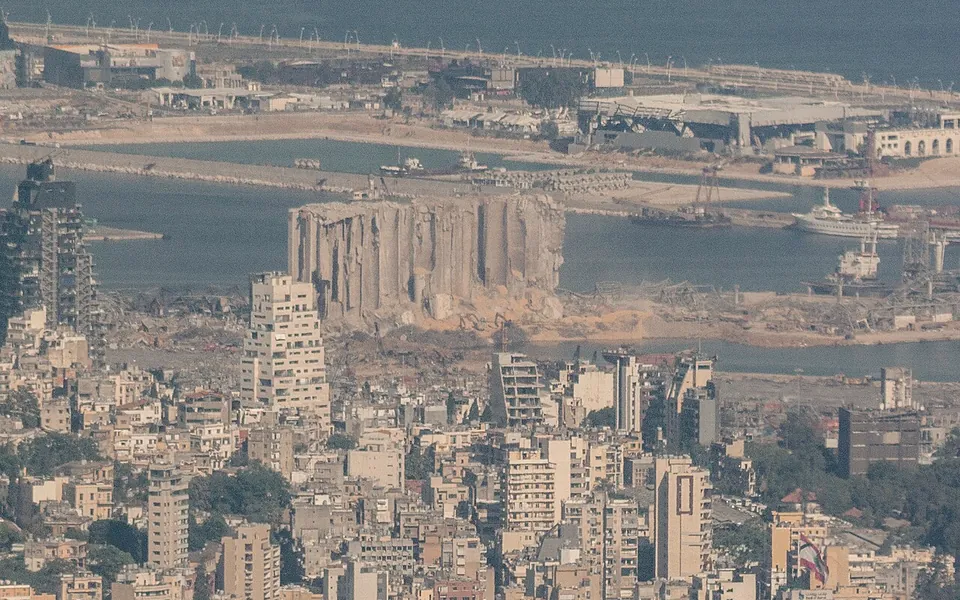
On Tuesday 4 August 2020, two explosions shook the port area of Beirut, the capital of Lebanon. The second, far more powerful, followed a smaller explosion and a fire in a port warehouse; it was heard more than 80 km away and felt in Cyprus. According to health officials, on the morning of Thursday 6 August there were at least 137 dead and some 5,000 injured, and rescue teams were still searching for missing people. These are provisional figures and may change.
What is known
President Michel Aoun said that 2,750 tonnes of ammonium nitrate had been stored at the port. Prime Minister Hassan Diab said that the facts about that dangerous warehouse had been known for at least six years and that it was unacceptable for the cargo to have been there without preventive measures. Ammonium nitrate is used mainly as a fertiliser, but it is also the basis of explosives. The government ordered house arrest for anyone involved in its storage and set up an investigative committee, and the Supreme Defence Council promised the maximum punishment for those responsible. What exactly triggered the explosion is still under investigation.
The material consequences are enormous. Lloyd’s List Intelligence counted seven vessels in port at the time of the blast, and local sources quoted by the maritime security consultancy Dryad Global said that almost all of the port’s logistics infrastructure had been destroyed. Maersk and Hapag-Lloyd confirmed damage to their offices, or their agents’ offices, in Beirut. The port’s grain silos, which according to some reports held around 85% of the country’s cereals, were destroyed, and Lebanon imports about 90% of its wheat, mostly through that port. UNICEF, citing reports, said the disaster could displace more than 300,000 people. The country was already in its worst economic crisis in decades, with hospitals under pressure from COVID-19.
The lesson on dangerous goods
The case shows what can happen when a dangerous substance is left in storage for years in an urban port without controls. In the European Union, the Seveso III Directive, incorporated into Spanish law by Royal Decree 840/2015, sets quantity thresholds above which an establishment holding dangerous substances must notify the authority, apply a major-accident prevention policy and, at the higher tier, draw up a safety report and an emergency plan. Ammonium nitrate appears in its annex with thresholds that, depending on the type of product, range from 10 to 5,000 tonnes for the lower tier and from 50 to 10,000 for the upper tier.
What to review
For a company that stores, transports or receives goods through ports and third-party warehouses, it is worth knowing which dangerous substances are in its chain and in neighbouring facilities, and whether its logistics operator complies with the rules on dangerous goods.
On insurance, it is worth checking whether the policy covers explosion and fire, goods stored at third-party premises and business interruption when a supplier or a port fails, and what exclusions it has: cover for an explosion may depend on whether it is attributed to an accident or to a violent act, and in Beirut the cause is still being investigated. Ask your adviser and your insurance broker how this applies to your case.
What is known to be dangerous and goes unmanaged ends up costing far more than preventing it.
This article is general information. It is not legal, tax or investment advice, and it does not take anyone’s particular circumstances into account.