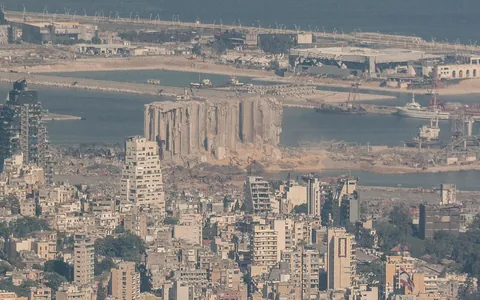
Heavy rain on 14 and 15 July 2021 caused deadly floods in Germany and Belgium. The provisional toll on 19 July, the aid announced and what insurance covers in Spain when a river bursts its banks.
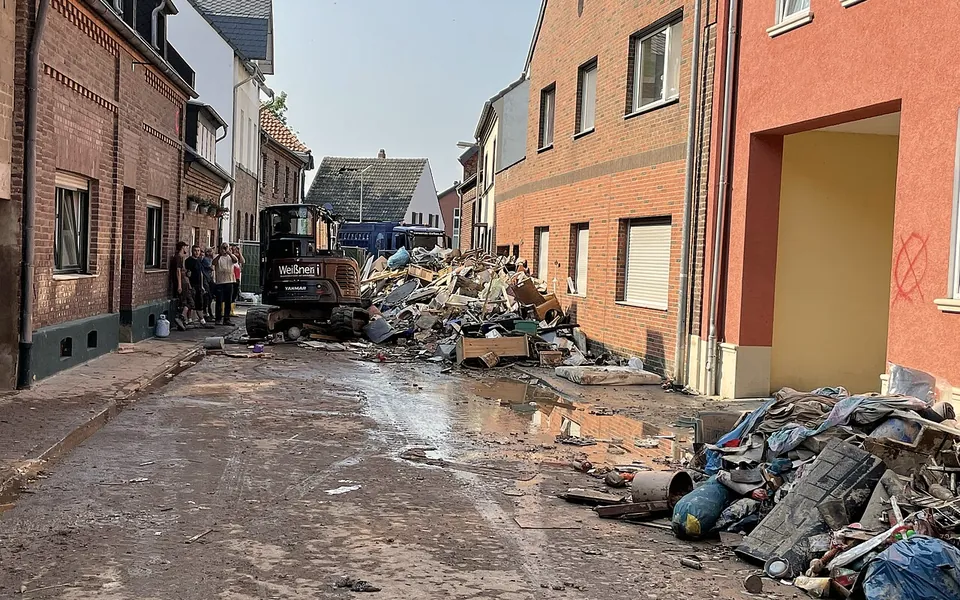
Between 12 and 15 July 2021, record-breaking rain fell across western Europe. Rivers burst their banks from 14 July and the floodwaters swept away whole towns in Germany and Belgium, with effects in the Netherlands too. On Monday 19 July the tolls were still provisional and rising every day.
What was known on 19 July
According to the AFP news agency, Germany had at least 165 dead: 117 in Rhineland-Palatinate, where 749 people were also injured, at least 47 in North Rhine-Westphalia and one in Bavaria. The district of Ahrweiler, south of Cologne, accounted for most of them: about 110 of the 156 victims recorded on 17 July, according to police. The media described the flooding as the country’s worst natural disaster in more than half a century.
In Belgium, the national crisis centre counted 27 dead on 17 July and 103 people missing or unreachable. In the Netherlands, the province of Limburg was on high alert and tens of thousands of people were evacuated, with no confirmed casualties as of Saturday morning. In Wassenberg, near Cologne, about 700 people were evacuated after a dam broke, and about 4,500 more downstream of the Steinbachtal dam, which was at risk of giving way.
The political response
Chancellor Angela Merkel visited the village of Schuld, in Rhineland-Palatinate, on Sunday 18 July, described the situation as “surreal” and called for a major effort to speed up policies against global warming. Federal President Frank-Walter Steinmeier went to Erftstadt, and Belgian Prime Minister Alexander De Croo and European Commission President Ursula von der Leyen toured affected areas of Belgium on Saturday 17. The German government announced emergency aid of at least €300 million from Wednesday 21 July and a reconstruction programme worth several billion. Steinmeier warned that assessing all the damage would take weeks, and Interior Minister Horst Seehofer’s handling was at the centre of a row over possible failures in warnings to the public.
What insurance covers in Spain
In Germany, flood cover does not come with the basic buildings policy: it is bought separately, as an “elementary damage” add-on. According to the insurance industry, only about half of residential buildings had it, so part of the losses may fall outside private insurance.
In Spain the mechanism is different. The Consorcio de Compensación de Seguros pays for extraordinary floods —rivers or natural watercourses overflowing after rain or snowmelt, and the sea surging inland on the coast— if the property has a policy in force in the property, life or accident lines, with the premium paid and the Consorcio’s surcharge shown on the receipt. Cover is automatic: the government does not need to declare a disaster area. For material damage from natural events there is a seven-day waiting period from the start of the policy.
Excluded are rain falling directly on the building or collected by roofs, terraces, drains and patios, and floods caused by the breaking of dams, canals or sewers, unless they are a direct result of a covered extraordinary event. Those damages depend on the ordinary policy. The Consorcio does not cover uninsured property either, and indirect losses are excluded, except business interruption as defined in the regulations.
It is worth checking that the home or business policy is in force and paid up, that the sums insured reflect the real value of what is protected, and what the ordinary policy covers for direct rain or seepage; for a company, also whether it includes business interruption. Ask your adviser how this applies to your case.
A distant disaster is a reminder that insurance is reviewed before it is needed.
This article is general information. It is not legal, tax or investment advice, and it does not take anyone’s particular circumstances into account.