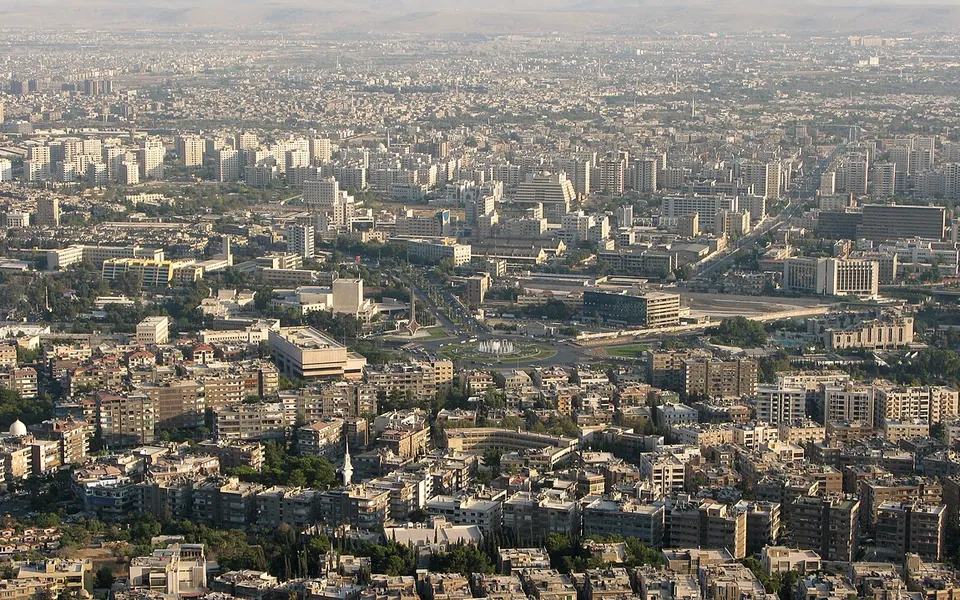
On 8 December 2024 rebels entered Damascus and the Syrian government fell; Bashar al-Assad left the country. What is known for certain, what remains open and how oil and diplomacy reacted.
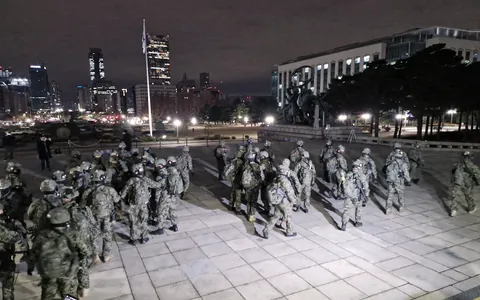
In the early hours of Sunday 8 December 2024, Syrian rebels entered Damascus and the government of Bashar al-Assad fell. A group calling itself the “Operations Room to Conquer Damascus” read a statement on state television announcing that Assad had been overthrown and that detainees were free. It ended some 50 years of rule by the Assad family. The offensive had begun on 27 November with the capture of Aleppo, the country’s largest city, and Hama. Homs, the third largest, fell the night before, when government forces withdrew, and the opposition also controlled much of the south. Insurgents entered Saydnaya prison and freed prisoners, according to the AP news agency.
The offensive was led by Hayat Tahrir al-Sham (HTS), headed by Abu Mohammed al-Golani. The United States and the UN consider HTS a terrorist organisation; the group says it cut its ties with al-Qaeda, from which it originates. It fights alongside the Turkish-backed Syrian National Army, with which it has been both ally and rival.
What is known about Assad and the government
As for Assad, the Syrian Observatory for Human Rights said he had left Damascus on a flight on Sunday. A Kremlin source cited by the TASS agency said Russia had granted him asylum on humanitarian grounds, and on Monday 9 December the Kremlin spokesman, Dmitry Peskov, confirmed it and said the decision had been taken personally by Vladimir Putin. Peskov declined to say where Assad is. The Russian Foreign Ministry said Assad had left Syria after negotiating with several parties to the conflict and after giving instructions for a peaceful transfer of power.
The prime minister, Mohammed Ghazi al-Jalali, said in a video that the government was ready to extend a hand to the opposition and hand its functions to a transitional government. He added that he was still at home and would go to his office in the morning, and asked citizens not to damage public property. The UN special envoy, Geir Pedersen, called for urgent talks in Geneva on an “orderly political transition”.
Outside Syria, Russia has a naval base at Tartus and an air base at Hmeimim in the country. Peskov said it is “premature” to talk about their future and that it will be a matter to discuss with whoever is in power in Syria. Israel struck Iran-linked sites in Syrian territory and moved tanks into a buffer zone, according to Al Jazeera, and said it does not intend to become involved in the conflict. In the United States, President-elect Donald Trump said the country should avoid military involvement, and the Biden administration said it did not intend to intervene.
The reaction of oil and of Spain
Oil rose moderately on Monday morning: Brent gained 0.51%, to $71.48 a barrel, and WTI 0.57%, to $67.58. An analyst at Mitsubishi UFJ Research and Consulting, Tomomichi Akuta, said Syria added “a new layer of political uncertainty” in the Middle East. The rise was capped by prospects of weaker demand: Saudi Aramco had cut its January prices for Asia to the lowest since early 2021, and OPEC+ had postponed the start of output increases until April.
In Spain, the foreign minister, José Manuel Albares, said on Sunday that the nine Spaniards in Syria, five Spanish women married to Syrians and four aid workers, were well and that the government was in permanent contact with them. With the airports closed, no evacuation was possible. Albares argued for a peaceful and stable solution, for the Syrian people to decide their own future and for the “balkanisation” of the country to be avoided.
What remains open
It remains to be seen who will govern Syria and under what rules, how the different armed forces and factions operating in the country will be integrated and what stance will be taken by the states with interests in the region. Peskov, according to Al Jazeera, expected a turbulent period with a high potential for conflict. Anyone with business or investments exposed to the Middle East can check how much there is, directly or through funds, and what plan exists if routes, energy prices or sanctions change. The situation is still evolving and no decision should rest on the first reports. Ask your adviser how this applies to your case.
The fall of a government is a fact; what comes next is still unwritten.
This article is general information. It is not legal, tax or investment advice, and it does not take anyone’s particular circumstances into account.