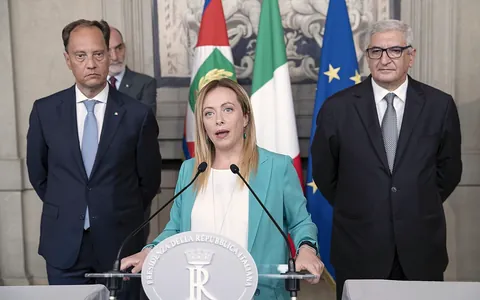
On 21 July 2022 Mario Draghi resigned as Italy’s prime minister and President Mattarella dissolved parliament. The election will be on 25 September; this is how the markets reacted.
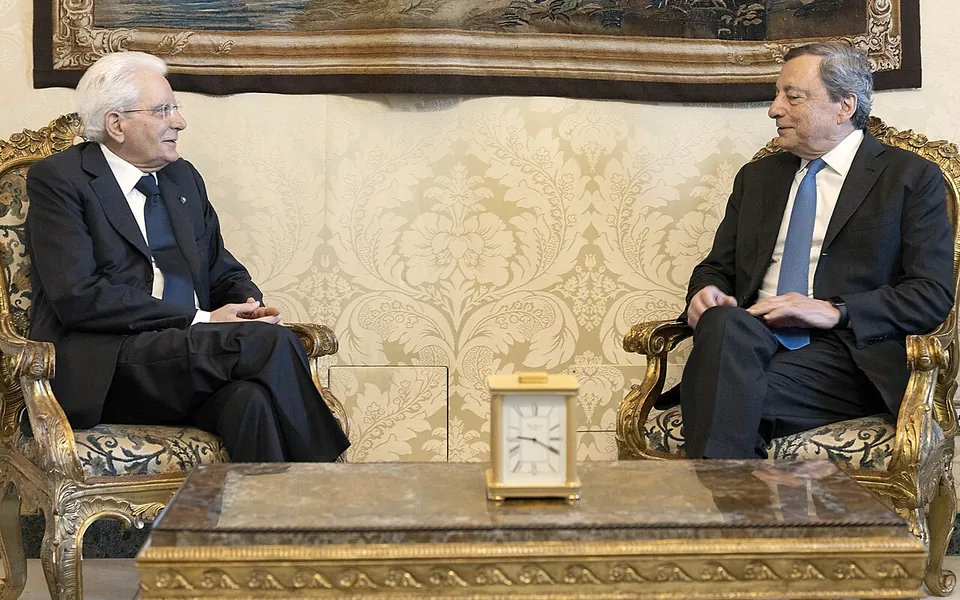
On 21 July 2022 the Italian prime minister, Mario Draghi, tendered his resignation to the president of the Republic, Sergio Mattarella, after his national unity government lost the support of three of the parties that backed it. Mattarella accepted it and that same day signed the decree dissolving parliament. Draghi had taken office in February 2021, heading a government that drew on almost the whole parliamentary spectrum.
How the crisis came about
The crisis began the previous week, when the Five Star Movement did not take part in a confidence vote on a government decree. Draghi then offered his resignation, which Mattarella did not accept, asking him to appear before parliament. On Wednesday 20 July, after Draghi’s speech in the Senate, the League, Forza Italia and the Five Star Movement did not take part in the confidence vote on a resolution backing the government. The next day Draghi spoke in the Chamber of Deputies and met Mattarella, who accepted the resignation.
Mattarella said he saw no possibility of forming another governing majority and dissolved parliament. The decrees published that same day in the Gazzetta Ufficiale call the general election for Sunday 25 September 2022 and set the first sitting of the new chambers for 13 October. Until then, Draghi’s government stays on in a caretaker role, limited to ordinary administration.
The market reaction
On 21 July, the day of the resignation, Italy’s risk premium — the spread between the 10-year bond and the German one — rose as high as 232 basis points, 19 more than the previous day’s close, and then eased to 220, according to ANSA; other sources, using a different benchmark bond, put it at 242.
The yield on the Italian 10-year bond rose by more than 20 basis points, to close to 3.7%. Milan’s stock exchange (the FTSE MIB) shed more than 2% in early trading, close to the 19-month low of the previous week. According to Investing.com, the resignation complicated the ECB’s task of keeping the bond market orderly just as it was starting to raise rates.
That day had a second side to it. The ECB raised its three key interest rates by 50 basis points, in its first increase in more than a decade — the deposit rate went to 0.00%, the main refinancing rate to 0.50% and the marginal lending facility rate to 0.75% — and approved the Transmission Protection Instrument (TPI), a tool to counter disorderly and unwarranted market dynamics that threaten the transmission of monetary policy. To activate it, the ECB assesses the fiscal and macroeconomic criteria of the country concerned, such as compliance with the EU fiscal framework.
What to follow
The immediate calendar is simple: an election campaign in the middle of summer, voting on 25 September and the new chambers meeting on 13 October. Those following the Italian economy will be watching the make-up of the next majority, the continuity of the reforms that go with the EU recovery funds, and the path of the risk premium.
For anyone with investments or business in Italy, it is worth knowing how much exposure they have to Italian public debt and companies, and on what maturity and funding schedule. This note is general information, not a recommendation; ask your adviser how to apply it to your situation.
Italy now has an election date; what the ballot boxes decide on 25 September is still open.
This article is general information. It is not legal, tax or investment advice, and it does not take anyone’s particular circumstances into account.