On 16 February 2024 Alexei Navalny, Russia’s best-known opposition figure, died aged 47 in an Arctic penal colony. What is known three days later and what legal and sanctions consequences it may have.
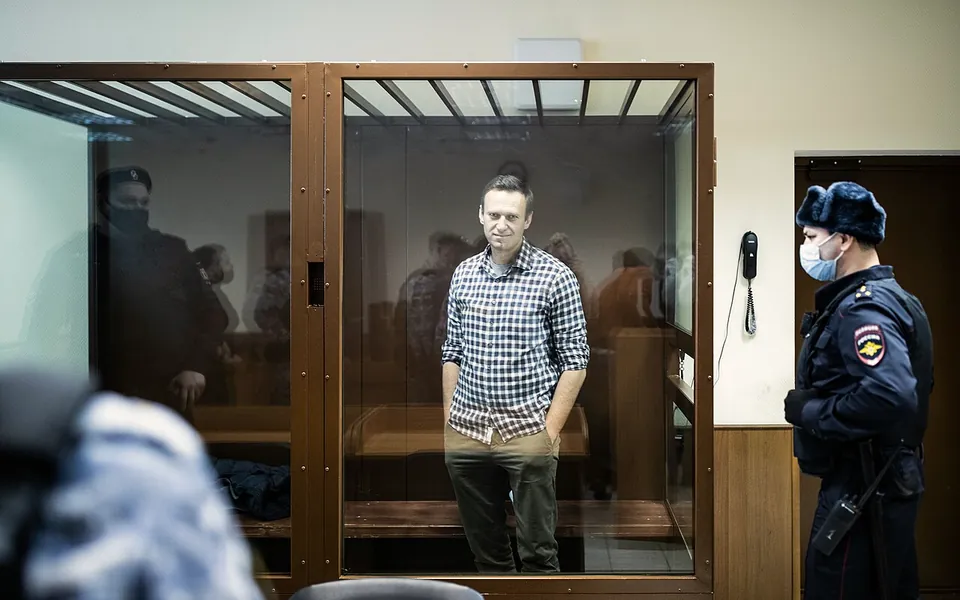
On Friday 16 February 2024, Russia’s prison service announced the death of Alexei Navalny, aged 47, at the IK-3 penal colony, known as Polar Wolf, in Kharp, a town in the Yamalo-Nenets autonomous district in the Russian Arctic, some 1,900 kilometres north-east of Moscow. He was serving a 19-year sentence.
What is known
According to the official statement, Navalny felt unwell after a walk and lost consciousness almost immediately. Medics tried unsuccessfully to resuscitate him, and the prison service said the causes were being established. His spokeswoman, Kira Yarmysh, initially said his team could not confirm the news until his lawyer reached the colony. The next day his allies confirmed the death.
Navalny, an opponent of President Vladimir Putin, was poisoned in August 2020 with the nerve agent Novichok and recovered in Germany. He was detained at Moscow airport on 17 January 2021 on his return, and remained in prison from then on. In August 2023 he was sentenced to 19 years on extremism charges and, in December, transferred to the Kharp colony.
On 19 February his mother and lawyers were not allowed into the morgue in Salekhard, where the body was believed to be. The Investigative Committee told them it would not hand the body over for at least another 14 days while a “chemical examination” was carried out, and that the cause of death remained undetermined.
The reactions
The Kremlin said Putin had been informed, and its spokesman, Dmitry Peskov, called the Western reaction hysterical and unacceptable. Russia’s Foreign Ministry asked for forensic results to be awaited. US Vice-President Kamala Harris and Secretary of State Antony Blinken said Russia is responsible. European Commission President Ursula von der Leyen said she was “deeply disturbed and saddened”, and the UN called for an independent investigation. His widow, Yulia Navalnaya, said at the Munich Security Conference on 16 February that she did not know whether to believe the news and that, if it were true, Putin and his allies “will not go unpunished”.
On 19 February Navalny’s widow, Yulia Navalnaya, attended the meeting of EU foreign ministers in Brussels, to which she was invited by the High Representative, Josep Borrell. Borrell named Putin as the main party responsible and said member states would propose sanctions on those directly responsible for Navalny’s treatment, including in the prison system, and that he would propose giving Navalny’s name to the EU’s human rights sanctions regime.
What legal consequences it may have
That regime, created by Regulation (EU) 2020/1998, allows the funds of people and entities responsible for serious human rights violations to be frozen and prohibits making funds or economic resources available to them. Listings require the unanimity of the Council. At the same time, the EU was preparing its thirteenth package of sanctions against Russia, which according to Euronews would also include Chinese companies over their links with Russia and which Hungary was blocking for the time being.
EU sanctions apply directly to companies and individuals in the Union, and breaching them carries penalties. For a company with operations in Russia or with customers and suppliers in its orbit, it is worth checking that it screens its counterparties and beneficial owners against the EU sanctions lists, that contracts include compliance clauses and that transactions through third countries are monitored. Ask your legal adviser how to apply this to your case.
Sanctions lists change with the news; compliance has to stay one step ahead.
This article is general information. It is not legal, tax or investment advice, and it does not take anyone’s particular circumstances into account.