A magnitude 7.6 earthquake struck Japan’s Noto Peninsula on 1 January 2024 and triggered a tsunami warning. What is known three days later and what businesses with interests there should review.
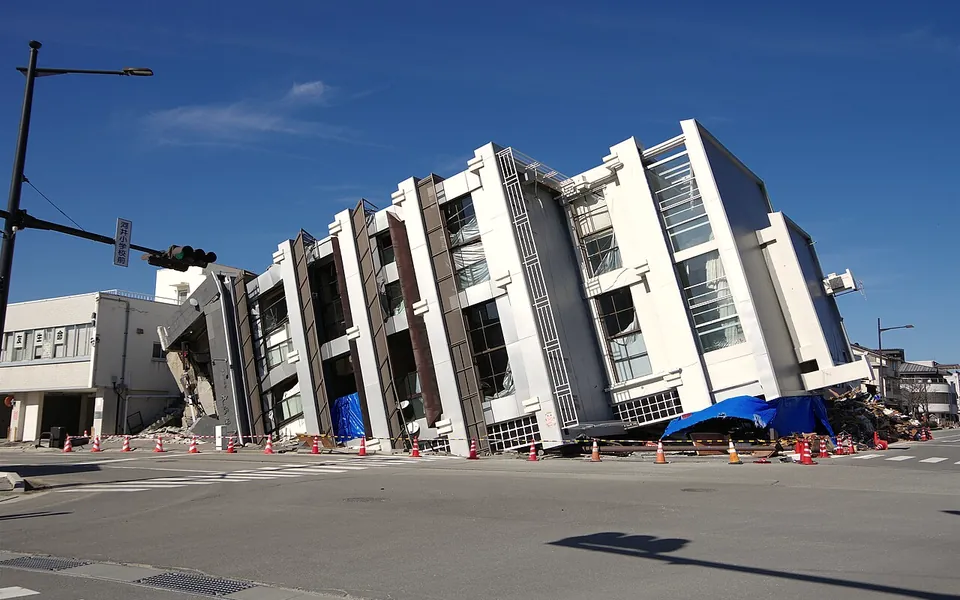
On Monday 1 January 2024, at 16:10 local time, a magnitude 7.6 earthquake struck the Noto Peninsula, in Ishikawa prefecture on Japan’s Sea of Japan coast. According to early reports, it was the largest ever recorded on that peninsula. The shaking was felt across much of the country, including in some buildings in Tokyo, and it came on the New Year public holiday.
What is known
The Japan Meteorological Agency issued a major tsunami warning, its highest category, for Ishikawa, the first at that level since the March 2011 earthquake, along with other warnings for Niigata and Toyama. The first waves were around one metre high in some places on the coast, and the major warning was later downgraded. About 100 hectares in the municipalities of Suzu and Noto were flooded, according to the Yomiuri newspaper.
The toll was still provisional. By 4 January local authorities had confirmed at least 78 dead and 330 injured, all close to the epicentre, and a list of some 50 people still unaccounted for. More than 33,000 people had left their homes and more than a dozen communities remained cut off by cracked roads. Rescue teams were racing against the clock: experts regard the first three days as especially critical.
In Wajima, a city of around 27,000 people, a large fire destroyed part of the port and its surroundings, and buildings collapsed, including one of seven storeys. About 100,000 homes were without running water, and more than 36,000 households in Ishikawa and Toyama lost power on the first day. Close to 600 aftershocks had been recorded since the main quake. Prime Minister Fumio Kishida took charge of the emergency response and raised the number of troops deployed in the rescue effort from about 1,000 to 4,600. Because several areas of the peninsula were hard to reach by road, the government sent supplies by sea.
Why it matters outside Japan
Japan sits where four tectonic plates meet and records hundreds of tremors a year, and its building rules and warning systems are designed with that in mind. Even so, the earthquake again showed that older timber buildings and access roads are the weak points, and that an entire region can be cut off for days. The economic damage had not yet been quantified.
In Spain seismic risk is moderate compared with Japan’s, but it is not zero: the Lorca (Murcia) earthquake of 11 May 2011 killed nine people and generated thousands of damage claims. Damage from earthquakes, floods and other extraordinary risks is paid in Spain by the Consorcio de Compensación de Seguros, a public body, provided the asset is covered by a policy that includes that cover, which is funded by a compulsory surcharge on the premium.
What to review
If your company has suppliers, customers or subsidiaries in Japan or in other seismic zones, the first step is to know where its critical points are: which components or services depend on a single plant or a single region, how much stock there is and what alternatives exist if a road, a port or a factory is out of action for weeks.
It is also worth reviewing insurance: what the property damage policy covers, whether it includes loss of profits from business interruption, which part falls to the Consorcio and which to the insurer, and whether the sums insured for buildings and stock are up to date. Ask your adviser and your insurance broker how this applies to you.
Earthquakes cannot be predicted, but it is possible to know what each business depends on.
This article is general information. It is not legal, tax or investment advice, and it does not take anyone’s particular circumstances into account.