Lai Ching-te won Taiwan’s presidential election on 13 January 2024, but his party lost its majority in parliament. What is known and why it matters to the global economy.
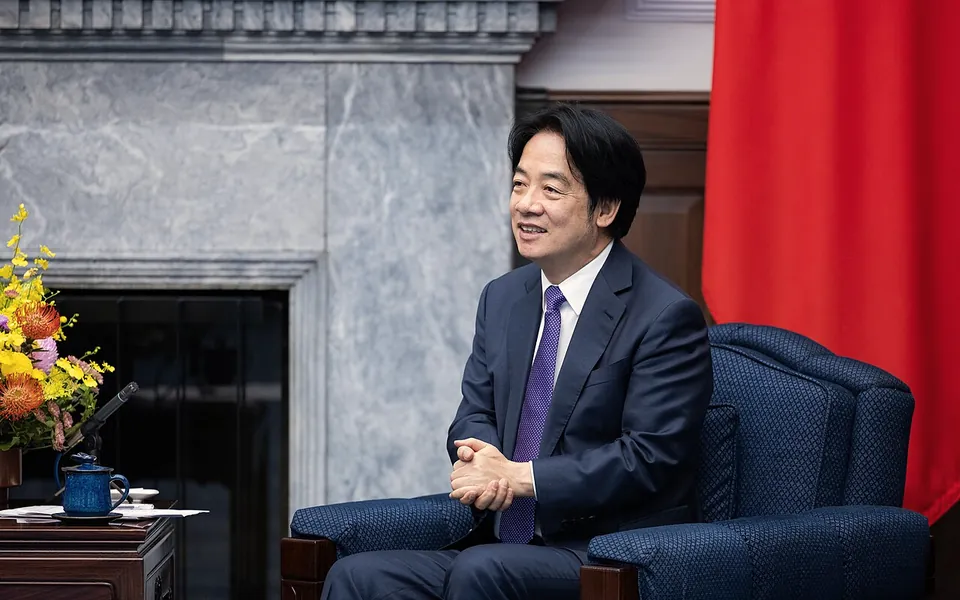
On Saturday 13 January 2024, Taiwan elected its vice-president, Lai Ching-te of the Democratic Progressive Party (DPP), as president with just over 40% of the vote, about 5.6 million votes. Hou Yu-ih of the Kuomintang (KMT) took 33.5% and Ko Wen-je of the Taiwan People’s Party (TPP) 26.5%. The DPP thus wins a third consecutive presidential term, though with a plurality and without a majority in parliament. In 2020 the outgoing president, Tsai Ing-wen, also of the DPP, had won with 57% and about 8.2 million votes.
What is known
In the legislative elections, held on the same day, the KMT won 52 of the 113 seats, the DPP 51 and the TPP 8, plus two independents. No party has a majority, so the TPP, Ko Wen-je’s party, will be decisive in forming majorities. Parliament opens on 1 February and the new president takes office on 20 May. Compared with the previous election, the DPP fell from 61 seats to 51 and the KMT gained 14.
In his victory speech Lai said the island had resisted attempts at influence by external forces and called for dialogue with China to replace confrontation. Beijing, which had called him a separatist before the vote, took a softer tone: it did not name him and said the result showed that the DPP cannot represent mainstream opinion on the island.
US President Joe Biden said his country does not support Taiwan’s independence, and Secretary of State Antony Blinken congratulated Lai. On 15 January Nauru announced that it was cutting relations with Taiwan and recognising Beijing, leaving the island with 12 diplomatic allies.
Why it matters to the global economy
Taiwan produces 60% of the world’s semiconductors and 90% of the most advanced ones, according to Reuters, and its largest maker, TSMC, is Asia’s most valuable listed company. These chips are in products ranging from mobile phones to fighter jets, and are a key part of the technology and artificial intelligence sectors. A disruption on the island, through conflict, blockade or sanctions, would affect the entire supply chain.
Analysts quoted by Reuters expected the market reaction to be limited. They did expect Taiwan’s stock market to be able to fall in the short term on fears of political gridlock in parliament, and the main source of uncertainty to be China’s response. An expert at the consultancy The Smart Cube said the result should not change chip supply in the short to medium term. Taiwan’s stock market had risen 25% in just over a year, and TSMC’s shares 32% in 2023. Some analysts also pointed to the possible effect of political gridlock on the Taiwan dollar.
What to review
For a company with technology suppliers or customers, what matters is how far it depends on components made in Taiwan, directly or through third parties: which products contain these chips, how much stock there is, what alternatives exist and how quickly they could be activated.
It is also worth checking what transport and credit insurance covers in the event of a blockade or conflict, and what supplier contracts say about force majeure. Ask your adviser how this applies to you.
The politics of a single island weigh on the economy of half the world.
This article is general information. It is not legal, tax or investment advice, and it does not take anyone’s particular circumstances into account.