On 8 July 2022 Shinzo Abe, a former prime minister of Japan, died after being shot in Nara during a campaign event. We look at what happened and at the economic legacy of “Abenomics”.
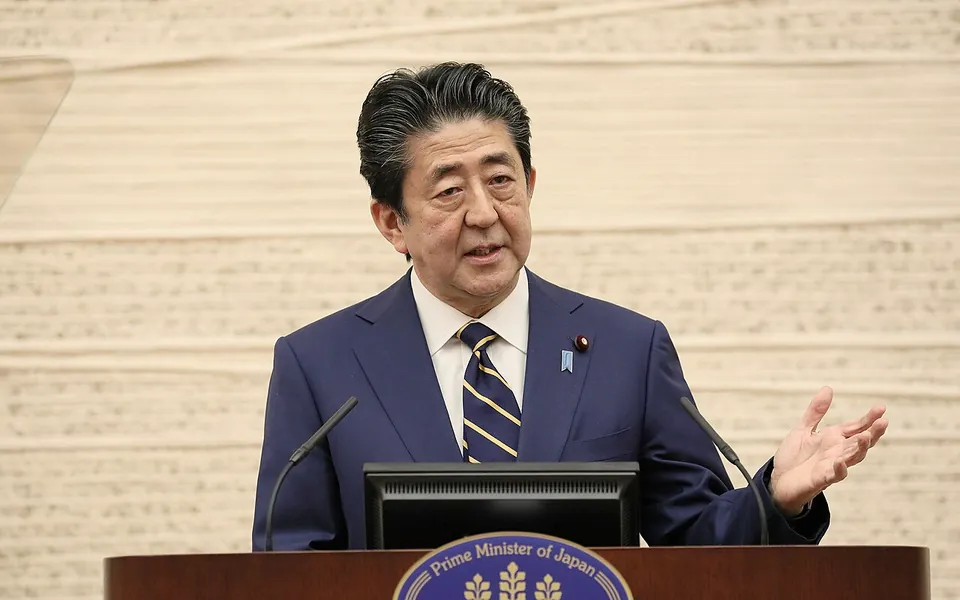
On 8 July 2022 the former Japanese prime minister Shinzo Abe died at the age of 67 after being shot twice from behind while giving a campaign speech outside a railway station in Nara, in western Japan. He was flown by helicopter to a hospital, where he died. Police arrested Tetsuya Yamagami, aged 41 and a former member of Japan’s navy, at the scene on suspicion of murder; according to police, he used a homemade gun about 40 centimetres long and admitted the attack.
The attack came two days before the upper house election on Sunday 10 July. The prime minister, Fumio Kishida, called it barbaric and said the vote would go ahead. It was held as planned: the coalition of the Liberal Democratic Party (63 seats) and Komeito (13) won 76 of the 125 seats contested, and turnout rose to about 52%.
Who Abe was
Abe first became prime minister in 2006, aged 52, the youngest in Japan’s history, and left office a year later, partly for health reasons. He returned to power in 2012 and held office until 2020, when he resigned citing a relapse of the ulcerative colitis he had had since his teens. When he left he was Japan’s longest-serving prime minister. He won six national elections and remained an influential figure in the Liberal Democratic Party, where he led its largest faction.
“Abenomics”
That is the name given to the economic policy Abe launched in 2012, built on three “arrows”: monetary easing, fiscal stimulus and structural reforms. Its aim was to end deflation and revive the economy. In January 2013 the government and the Bank of Japan set a 2% inflation target in a joint statement, and in April that year the central bank, led by Haruhiko Kuroda, launched an asset-purchase programme that doubled the monetary base.
Monetary easing weakened the yen and lifted share prices, which benefited large exporters. In April 2014 Japan’s consumption tax rose from 5% to 8%, and the economy levelled off after the increase. In June 2022 the Bank of Japan was still following that approach: on 17 June it kept its short-term rate at –0.1% and its commitment to keeping the 10-year bond yield at around 0%, while other major central banks were already raising rates.
A balance sheet with nuances
Analysts agree that the results were mixed. Deflation eased, unemployment fell to its lowest in decades and Japan recorded eight straight quarters of growth between 2015 and 2017, its longest run in almost thirty years. But the 2% inflation target was not reached on a sustained basis, average real growth in his second term was 0.9% (according to the economist Kaya Keiichi, excluding 2020), the goal of lifting nominal GDP to 600 trillion yen by 2020 was not met, and wages grew less than expected.
Public debt was above 200% of GDP before the pandemic, the highest in the OECD. His successor, Yoshihide Suga, pledged to continue “Abenomics”; the current prime minister, Fumio Kishida, has distanced himself from it and speaks of “new capitalism”.
Abe leaves a contested economic legacy: the measures are well known, and the verdict on their effects will stay open.
This article is general information. It is not legal, tax or investment advice, and it does not take anyone’s particular circumstances into account.