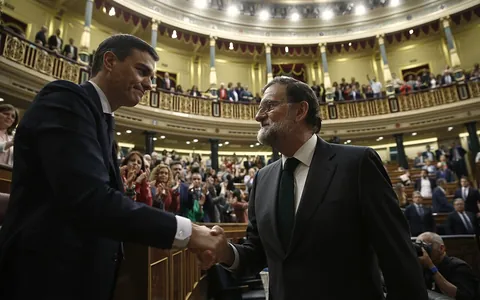
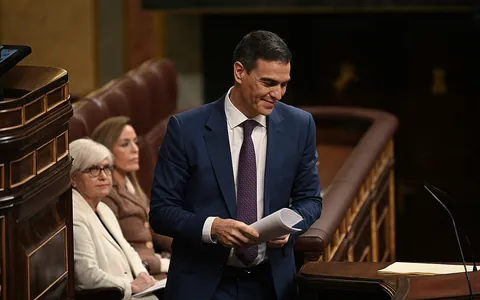
On 29 April 2024, five days after announcing a pause in his agenda, Spain’s prime minister, Pedro Sánchez, said he is staying in office. What happened in those days and what the Constitution provides for.
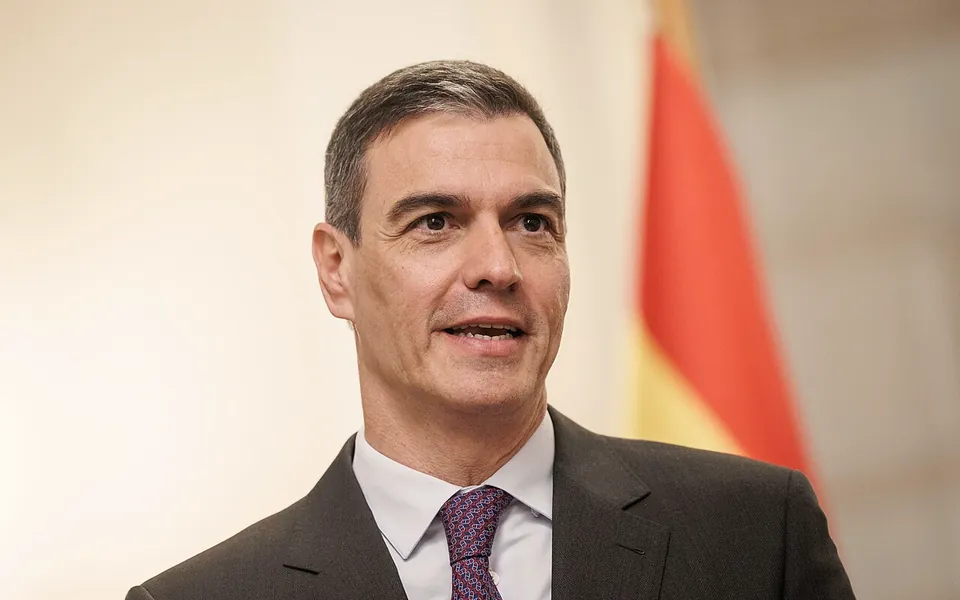
Prime Minister Pedro Sánchez announced on Monday 29 April 2024, in an institutional statement at the Moncloa Palace, that he is staying at the head of the government. He did so five days after publishing on the social network X a letter to the public in which he said he needed to “stop and reflect” on whether he should continue. The statement had been scheduled for 12:00 and was brought forward to 11:00.
What happened between 24 and 29 April
That week it emerged that a Madrid investigating court had opened preliminary proceedings against the prime minister’s wife, Begoña Gómez, for alleged influence peddling and corruption in business, following a complaint by the organisation Manos Limpias. Preliminary proceedings are an investigation phase and do not prejudge the outcome of the case. On Wednesday 24 April, Sánchez published his letter: he described the situation as an operation of “harassment and demolition” against his wife and himself, announced that he was cancelling his public agenda for a few days and said he would appear on Monday 29 to announce his decision.
On Monday 29, Sánchez said he had decided to continue, “with even more strength”, at the head of the government. He explained that the decision was not a full stop followed by a continuation but a new paragraph, and committed to working for the democratic regeneration he considered pending.
He also said that the support of his party, the PSOE, had been decisive in his decision, asked the social majority to mobilise and said the campaign against him and his wife has lasted ten years. He did not announce that elections would be called; under article 115 of the Constitution, the proposal to dissolve parliament is for the prime minister to make, after deliberation by the Council of Ministers.
The reactions
Ministers and PSOE leaders, who had asked Sánchez to continue, welcomed the decision. In the opposition, the leader of the PP, Alberto Núñez Feijóo, said Sánchez had preferred to flee forward rather than resign, and the PP said the prime minister had neither resigned nor called elections.
What the Constitution provides
The Constitution does not provide for a pause of this kind, but it does regulate when the government ceases and what tools the prime minister and Congress have. Under article 101, the government ceases after general elections, in cases of loss of parliamentary confidence provided for in the Constitution, or on the resignation or death of its prime minister, and continues in a caretaker capacity until the new government takes office.
The prime minister can put a question of confidence to Congress on the government’s programme or a statement of general policy, after deliberation by the Council of Ministers (article 112), and propose the dissolution of the Cortes, which the King decrees, setting the date of the elections (article 115). That proposal cannot be made while a motion of no confidence is pending, and no new dissolution is possible until a year has passed since the previous one. A motion of no confidence (article 113) must be proposed by at least a tenth of the deputies, include a candidate for prime minister and obtain an absolute majority in Congress.
For businesses and families, the announcement does not by itself change any rule: the laws and decrees in force continue to apply. The legislature, which began after the general election of 23 July 2023, can last up to four years from that date, according to the Constitution. The immediate electoral calendar included the Catalan parliamentary elections, called for 12 May, and the European elections from 6 to 9 June.
The pause has ended without institutional change: the prime minister continues and no general election has been called.
This article is general information. It is not legal, tax or investment advice, and it does not take anyone’s particular circumstances into account.