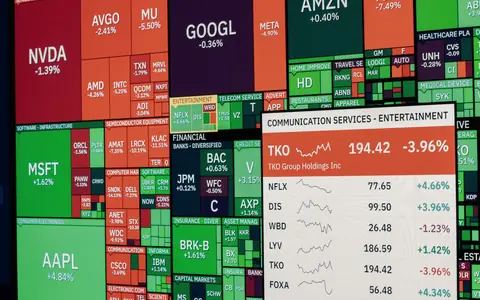
- On 31 July the Bank of Japan raised rates again; on 2 August a weaker-than-expected US jobs report sparked recession fears.
- Each piece of news on its own was manageable, but together they reinforced each other: investments funded with cheap yen began to be unwound in a hurry.
- It is worth knowing the level of debt behind each position: the more leveraged an investment, the greater the pressure to sell.
On 31 July 2024, the Bank of Japan raised interest rates again. Two days later, on 2 August, a weaker-than-expected US jobs report sparked fears of a recession. They were two pieces of news of a different nature, from two different economies, that reached the market almost at once and whose combined effect was greater than the sum of their parts. It was a reminder that markets absorb an isolated piece of news better than an unexpected combination.
Understanding how they reinforced each other helps explain why financial shocks sometimes seem out of proportion to their apparent cause. Markets do not react only to news but to the position in which it finds investors. When many share the same bet, any change of circumstances can push them to leave through the same door.
Two pieces of news at once
Each piece of news on its own was manageable, but together they reinforced each other in the market and fed recession fears. That combination explains why the move was sharper than either figure alone would have justified. The rate rise made yen funding dearer; the jobs data raised doubts about the strength of the US economy. Neither was, on its own, a reason for alarm; what mattered was the timing and the position of those receiving them.
A market that has been calm for some time is especially sensitive to surprises. If investors were counting on a stable environment, two pieces of news that call it into question at once can produce a rapid review of positions. It was not a verdict on the economy as a whole, but the reaction of those who had built their portfolios on assumptions that ceased to look safe. When confidence suffers, investors tend to reduce risk across the board, without distinguishing between good and bad assets.
Unwinding positions
Investments funded with cheap yen began to be unwound in a hurry. When an investment is funded in a cheap currency and that currency becomes dearer, many investors close positions at the same time, which amplifies the move. The investor who borrowed in yen has to repay a debt that now costs more. The longer the position has been held, the greater the effect of closing it all at once tends to be.
The process has something of a vicious circle: selling assets lowers their prices, falling prices force others to sell, and the yen keeps appreciating as positions are closed. What had worked as a silent support for markets became a source of pressure. It is a well-known mechanism, but one that only becomes visible when it is triggered. Those who have lived through it remember that the hard part is not understanding the explanation but keeping calm while it happens.
What to bear in mind
It is a reminder that markets are linked through financing. Someone who has never invested in Japan can still see their portfolio affected by what happens there, because asset prices depend on who finances them and on what terms. That interdependence cannot be eliminated, but it can be understood. Understanding it is the first step towards deciding what level of exposure is acceptable.
The more leveraged an investment, the greater the pressure to sell it at a bad moment, which is why it is worth knowing the level of debt behind each position. This holds for a fund, for a personal portfolio and for a company’s financing. Talking to the adviser about what part of what one owns was financed with debt allows the risk to be gauged before a shock puts it to the test.
It was the trigger for the following Monday’s shock.
This article is general information. It is not legal, tax or investment advice, and it does not take anyone’s particular circumstances into account.