Spain won the Euro 2024 final on 14 July in Berlin (2-1 against England) and claimed a fourth European title. What the federation earns, what the hospitality sector expected and what a business should know before using it.
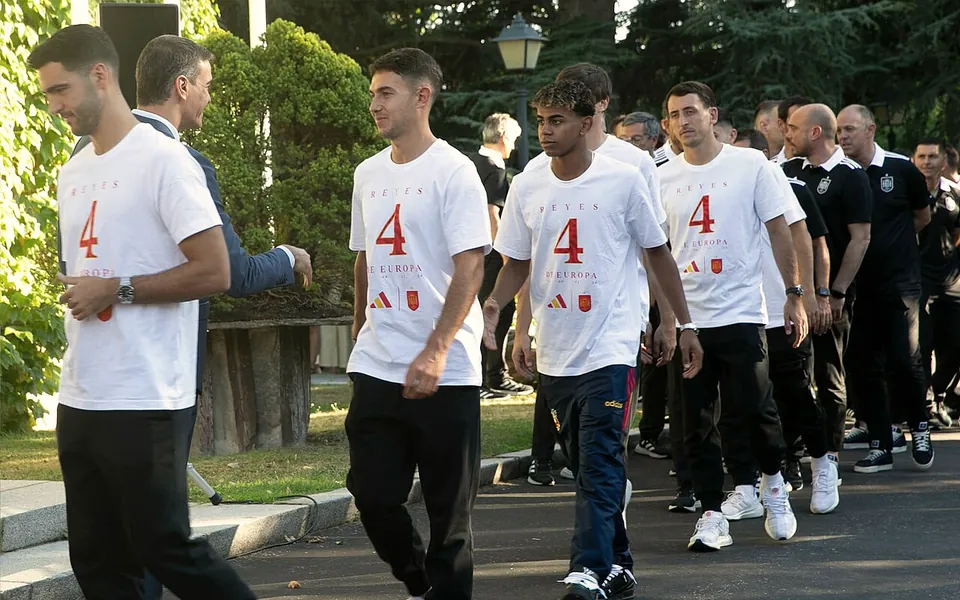
On Sunday 14 July 2024, at the Olympiastadion in Berlin, Spain beat England 2-1 in the European Championship final. Nico Williams scored in the 47th minute, Cole Palmer equalised in the 73rd and Mikel Oyarzabal scored the winner in the 86th. It is the national team’s fourth European title, after those of 1964, 2008 and 2012, a record for the competition, and it came with seven wins in seven matches, with Luis de la Fuente as head coach.
UEFA named Rodri player of the tournament and Lamine Yamal young player of the tournament; Yamal had turned 17 the day before the final. On Monday 15 the team was received by King Felipe VI at La Zarzuela and by Prime Minister Pedro Sánchez at La Moncloa, and then celebrated the title with fans in Madrid’s Plaza de Cibeles.
What the federation earns
The Royal Spanish Football Federation (RFEF) is paid by UEFA for sporting merit: €9.25 million for taking part, €1 million for each group-stage win, €1.5 million for reaching the round of 16, €2.5 million for the quarter-finals, €4 million for the semi-finals and €8 million for winning the title. With three group-stage wins, the total comes to €28.25 million, the maximum possible, out of a tournament prize pot of €331 million.
The federation puts most of that amount back into Spanish football, and part is shared out as bonuses among players and coaching staff. UEFA also pays clubs that release players to their national teams during the tournament a set amount per player per day, €10,000.
The effect on hospitality and spending
Before the final, Hostelería de España estimated that bars and restaurants would bill about €117.6 million that day, with increases of between 15% and 50% depending on the type of venue and its location, and expected spending to shift to the afternoon and evening while some restaurants would have fewer bookings. Hostelería Madrid put at €37 million what had been generated in the region up to the semi-finals, with about 2.1 million viewers in bars and an average spend of €18 a person.
For the day of the final, Hostelería Madrid expected more than 640,000 people in the region’s bars and pubs, with about €11.6 million in revenue, and Hostelería de España said venues with themed areas and special offers would benefit most. Several cities, among them Madrid and Barcelona, set up giant screens to follow the matches.
These are the sector’s own estimates, not measurements, and the overall economic effect of a tournament is hard to quantify. Economists often warn that part of the spending in bars replaces spending that would have been made elsewhere, and the real figures will be known when consumption or occupancy data are published.
What your business should know if it wants to use the title
Companies that want to join in the mood of the victory in their advertising should know that the name, crest and image of the national team and its players are protected. Using them without a licence can amount to trade mark or image-rights infringement, and campaigns that suggest a link with the team without having one, so-called ambush marketing, can lead to claims. Becoming an official sponsor requires a contract with the federation or the rights holder.
Before launching a campaign with references to the Euros, it is worth having it reviewed by an intellectual property and advertising lawyer. For your own situation, ask your adviser.
A sporting title stirs a country’s emotions; its effect on the accounts is measured afterwards.
This article is general information. It is not legal, tax or investment advice, and it does not take anyone’s particular circumstances into account.