On 9 October 2023 the Royal Swedish Academy of Sciences awarded the Nobel in Economic Sciences to Claudia Goldin for explaining differences between women and men in the labour market. What her work means for employers.
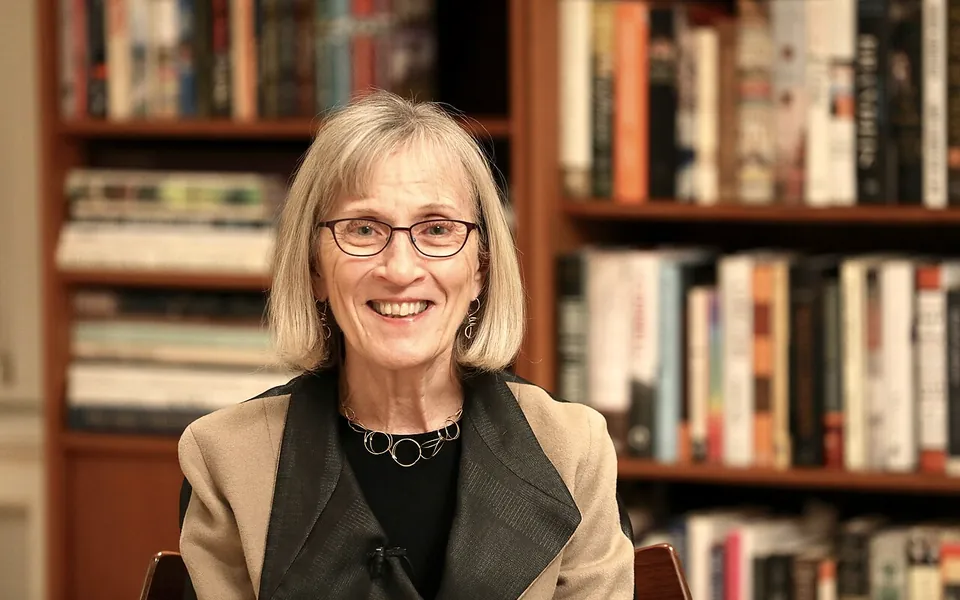
On 9 October 2023 the Royal Swedish Academy of Sciences awarded the Sveriges Riksbank Prize in Economic Sciences in Memory of Alfred Nobel to Claudia Goldin, of Harvard University, “for having advanced our understanding of women’s labour market outcomes”. Goldin was born in New York in 1946 and took her PhD at Chicago in 1972. She is the third woman to receive the economics prize, after Elinor Ostrom (2009) and Esther Duflo (2019), and the first to receive it without sharing it.
What she found
Goldin combed the archives to assemble more than 200 years of US data and explain how and why differences in earnings and employment between women and men have changed. Her first finding is that female labour-force participation did not follow an upward line but a U-shaped curve: that of married women fell with the shift from an agrarian to an industrial society in the early nineteenth century, and rose again with the growth of services in the early twentieth. She explains it by structural change and by evolving social norms about women’s role in the home and family.
During the twentieth century women’s education rose steadily, and today it is higher than men’s in most high-income countries. Goldin showed that the contraceptive pill accelerated the change by offering new possibilities for planning a career. Even so, the pay gap hardly closed for a long time: partly because educational decisions, which shape a whole working life, are taken early and based on what previous generations experienced.
The most relevant result for employers is the last one: historically, much of the gap was explained by differences in education and occupation, but Goldin has shown that today most of the earnings difference is between men and women in the same occupation, and that it arises largely with the birth of the first child.
What it means for employers
In Spain, Royal Decree 902/2020 requires all companies, whatever their size, to keep a pay register with average and median salaries broken down by sex and by job group, category or post, and to justify the differences when the average or median for one sex exceeds the other’s by at least 25%. Companies obliged to have an equality plan, which covers those with 50 or more employees, must also include a pay audit.
At European level, Directive (EU) 2023/970 of 10 May 2023 on pay transparency must be transposed into national law by 7 June 2026 and will require companies with 100 or more employees to report regularly on their pay gap.
Goldin’s results suggest looking at the gap within each job, not only between categories, and seeing what happens to pay, promotion and working hours after the first child arrives. Her data are American and the Spanish context has its own features; what she offers is a method, not a recipe. Ask your employment adviser how to apply it to your workforce.
Measuring the gap within each job is the first step to understanding it.
This article is general information. It is not legal, tax or investment advice, and it does not take anyone’s particular circumstances into account.