- On 7 October Hamas launched an attack on Israel that led to a war in Gaza, with an enormous human cost.
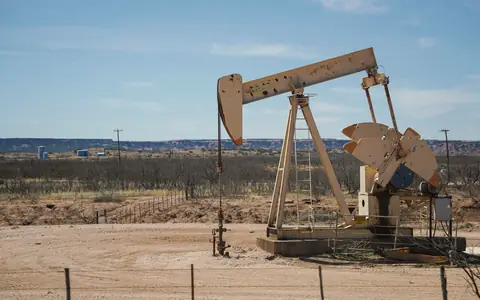
- Oil and gold rose on the risk of a wider regional conflict: these are initial reactions that do not prejudge what follows.
- A new focus of geopolitical risk is a reason to review routes, insurance and contracts, and not to concentrate wealth.
On 7 October 2023 Hamas launched an attack on Israel that led to a war in Gaza. The human tragedy comes first: the loss of life, the suffering of civilians and the grief of families on both sides, which admit no comparison with any economic analysis. This text confines itself to what markets and companies had to look at in the following weeks.
Beyond the human tragedy, the conflict raised concern in markets at the possibility of it spreading to the rest of the region. The Middle East is a key area for energy, for transport routes and for international political stability, and any sign of escalation is quickly reflected in prices and in business decisions. Companies operating with the region, or relying on transport routes that cross it, had to assess quickly how their supply chains, delivery times and insurance costs might be affected.
What happened
From day one, the war in Gaza forced markets to consider a concrete scenario: that the violence might reach other countries in the area and their energy and transport routes.
In situations like this, markets do not try to value the conflict itself, but its possible economic consequences: disruptions to energy supply, trade tensions, sanctions or effects on confidence. That valuation is provisional and changes every day with the information available, which explains prices’ sensitivity to any news. Experience of earlier crises shows that the economic effects of a conflict depend on its duration, its geographical extent and whether it affects critical infrastructure or routes, factors that nobody could know in the first weeks.
The market reaction
Oil and gold rose on the risk of a wider regional conflict. Crude reacts because the region is key to its production and transport, and gold tends to attract demand at times of uncertainty, because of its status as a safe-haven asset. These are initial reactions that do not prejudge what will follow.
It is best not to draw conclusions from the first movements. Rapid price rises in the face of a crisis can persist, but they can also reverse if the situation clears up or is contained. Reacting to every swing is usually a poor guide, which is why the prudent course is to look calmly at one’s own exposure and not to decide on impulse. Gold is regarded as a safe-haven asset because, historically, it has held its value in times of tension, but its price also fluctuates and it does not guarantee short-term results. It is an example of how even havens carry risks.
A new focus of risk
A new focus of geopolitical risk was added to the war in Ukraine. For energy, shipping routes and markets, the region was again a source of uncertainty. Companies with foreign trade or energy dependence can review their routes, transport insurance and supply contracts.
And investors can check that they do not concentrate their wealth in a single asset or region. This does not mean predicting the course of the conflict, which no one can anticipate, but making sure that no specific surprise has a disproportionate effect. A calm conversation with the adviser about real exposure is more useful than any hasty reaction. Transport and export-credit insurance can include specific clauses for conflict zones, so it is worth reading the terms carefully and checking with the broker whether any operation is excluded.
In times of uncertainty, diversification and liquidity give room not to decide in a hurry.
This article is general information. It is not legal, tax or investment advice, and it does not take anyone’s particular circumstances into account.