On 15 April 2019 a fire destroyed the spire and much of the roof of Notre-Dame de Paris. What is known about the damage, the pledged donations and how patronage works in France and in Spain.

On the afternoon of Monday 15 April 2019 a fire broke out in the cathedral of Notre-Dame de Paris, some 850 years old. The wooden spire collapsed and the fire destroyed the roof. About 400 firefighters worked through the night and, according to junior interior minister Laurent Nuñez, saved the building within a critical window of 15 to 30 minutes. One firefighter was injured.
The damage
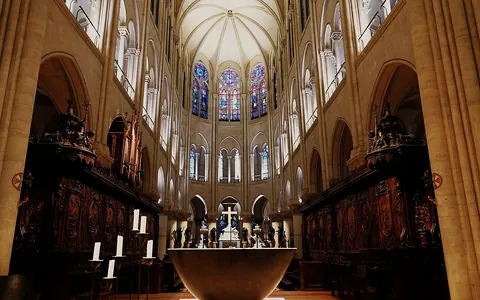
The spire collapsed, the roof was destroyed and part of the upper vaulting fell. The two towers, the walls and the rose windows remained intact, and inside the statues and the golden cross above the altar are still standing. The organ, with almost 8,000 pipes, was damaged. The number of works lost is unknown; firefighters and staff formed a human chain to carry out pieces such as the Crown of Thorns and the tunic of Saint Louis, which were stored at Paris City Hall.
The cause has not been determined. The Paris prosecutor, Rémy Heitz, said nothing indicates a deliberate act and that the investigation will be “long and complex”; fifty investigators are working on it and the most cited hypothesis is an accident linked to the work on the spire, still unconfirmed. President Emmanuel Macron promised to rebuild the cathedral even more beautifully and to finish it in five years; some experts believe it will take decades. On 17 April, Prime Minister Édouard Philippe announced an international architectural competition for the new spire.
The donations and the tax debate
Within 24 hours more than €800 million was pledged, according to France 24. The largest announced contributions: €200 million from the Arnault family and LVMH, €200 million from the Bettencourt Meyers family (L’Oréal), €100 million from François-Henri Pinault and his holding company Artémis (Kering) and €100 million from Total; Apple announced a contribution without giving a figure. Counts vary by outlet and day, and these are announced pledges, not sums already paid in.
The tax debate came quickly. In France, the 2003 Aillagon law lets companies deduct 60% of what they donate, with a cap of 0.5% of turnover, and individuals 66%, up to 20% of taxable income. With a 60% deduction, a company donating 100 bears a net cost of 40 if it stays within the cap, and that fuelled the criticism. Pinault announced that his donation would not be deducted. Jean-Jacques Aillagon, a former culture minister and director of the Pinault Collection, proposed raising the companies’ deduction to 90%.
The government announced a special regime for individuals only: a 75% deduction up to €1,000 and 66% above that, with a bill due to be presented the following week; no change was announced for companies. A wider debate also opened up, about inequality and the taxation of large fortunes.
Patronage in Spain
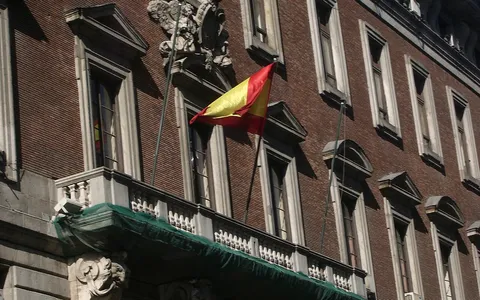
In Spain, Law 49/2002 on the tax regime of non-profit organisations and tax incentives for patronage rewards donations to the bodies it lists: foundations, associations declared of public utility and other non-profit organisations, the State, the autonomous communities and local authorities, public universities, the Instituto Cervantes and the Institut Ramon Llull, among others.
With the percentages in force in 2019, a personal income tax payer deducts from the tax due 75% of the first €150 donated and 30% of the rest; if they have been donating to the same body for at least three years in equal or growing amounts, the part above €150 is deducted at 35%. Companies deduct 35% of what they donate in corporate income tax, or 40% if donations are recurring.
There are limits and requirements. The base for the deduction cannot exceed 10% of the taxpayer’s net taxable income (base liquidable) in personal income tax or, in corporate tax, 10% of the taxable base, with the excess able to be applied over the following ten years. The donation must be irrevocable and supported by a certificate from the beneficiary body. The Budget law may raise the percentages by up to five points for priority patronage activities.
An example: €1,000 donated gives a deduction of €367.50 in personal income tax (€112.50 for the first €150 and €255 for the remaining €850), a net cost of €632.50. Compared with the French system, the Spanish one deducts lower percentages on large donations and sets the caps on income or taxable base, not on turnover. Ask your adviser how this applies to your situation.
Notre-Dame has shown how much can be mobilised in hours; the tax rules decide what each donation really costs.
This article is general information. It is not legal, tax or investment advice, and it does not take anyone’s particular circumstances into account.