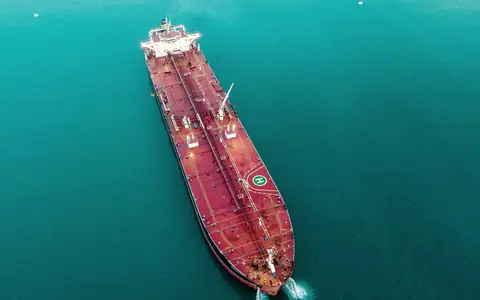
- The closure of Hormuz put one of the planet’s most important energy routes at risk and pushed up oil and gas at a stroke.
- The biggest energy crisis since 2022 was beginning: a supply shock that no central bank can solve with interest rates.
- Dearer energy brings a new wave of inflation for families and companies, and budgets need a cushion.
On 28 February 2026 the United States and Israel launched a coordinated attack on Iran in which the supreme leader, Ali Khamenei, died. Iran responded with missiles against Israel and against bases in the Gulf, and closed the Strait of Hormuz to commercial traffic. Behind every armed conflict there are victims and families, and that should be borne in mind before speaking of markets.
Beyond the human and the political, which lie outside the scope of these lines, the episode matters because it affects one of the arteries of the world economy. When the flow of energy is interrupted, the effect is felt in the price of fuel, electricity, transport and, in time, almost everything that is produced and consumed. That is why crises of this kind are followed so closely even from places far from the conflict.
Why Hormuz matters
Around a fifth of the world’s oil and liquefied natural gas passes through Hormuz. When so narrow a passage closes, the effect is not confined to the region: it is passed on to energy prices, to freight and to the planning of any company that consumes or transports fuel. The more a business depends on energy, directly or indirectly, the more exposed it is to what happens in so distant a place.
The reason is that there are few alternatives. Oil tankers and gas carriers cannot replace overnight a route carrying so large a volume, and marine insurers tend to raise their prices or withdraw cover altogether in conflict zones. The result is that energy takes longer to arrive, costs more and leaves buyers competing for the cargoes available. And that rise in cost reaches the final consumer sooner or later.
A supply crisis
The biggest energy crisis since 2022 was beginning. Supply crises are especially awkward because they cannot be solved with monetary policy: they depend on military and diplomatic factors that no central bank controls and that markets must price with very little information.
It helps to distinguish between a demand shock and a supply shock. Interest rates act on demand, cooling or warming it; but when it is supply that fails, prices rise and activity suffers at the same time, and the usual tools are of little use. That explains why these crises generate so much uncertainty and why markets react with such wide swings. For anyone planning, the practical conclusion is that no forecast replaces a budget with room to spare.
Inflation and budgets
With dearer energy came a new wave of inflation too. For families, that means higher bills and consumer prices; for companies, costs that are either passed on to customers or absorbed in the margin, with the resulting pressure on liquidity. The more energy weighs in the business, the sooner it is felt. A haulier or an energy-intensive industry feels it almost at once; an office or a shop will feel it through suppliers and utilities.
This is the moment to review energy contracts, to understand how the price is set in each and to check whether fixed-price or hedging options exist. Also to build the budget with scenarios, not a single figure, and to avoid hasty decisions driven by the headline of the day. Calm in planning is today a competitive advantage. It is also worth speaking to the bank before it is needed, to know what liquidity lines are available if cash comes under strain.
Geopolitics rarely gives warning, and budgets need a cushion for when it does not.
This article is general information. It is not legal, tax or investment advice, and it does not take anyone’s particular circumstances into account.