- On 9 April Trump suspended the highest reciprocal tariffs for 90 days, except for China.
- With China, the escalation took the levies above 100%.
- The lesson is not having to sell at a bad moment: liquidity, prudent debt and a plan defined in advance.
After several days of heavy falls in stocks and bonds, on 9 April 2025 Donald Trump suspended the highest reciprocal tariffs for 90 days, except for China. With that country, the escalation of measures took levies above 100%. The announcement came after several days of extreme nervousness in the markets and marked an unexpected turn in the sequence that began with ‘Liberation Day’. Those who had followed the falls with concern saw the mood change completely within a few hours.
For many investors and business owners, those were hard days to follow: information changed every few hours and decisions, both political and financial, seemed to be taken at an unusual speed. It is worth remembering that an episode of this kind offers fewer signals about the future than lessons on how to be prepared for high-volatility scenarios. Volatility is not a failure of the system but a feature that shows itself more strongly at certain moments, and the best response to it is preparation, not reaction.
Falls in stocks and bonds
The preceding days saw heavy selling, in both shares and government debt, an unusual kind of movement because bonds usually behave as a refuge. That gave the markets a particular tone of nervousness until the announcement of the pause arrived.
When stocks and bonds fall together, portfolios believed to be diversified suffer more than expected. That does not mean diversification has stopped working, but it does mean that its limits can become visible at moments of greatest tension. It is wise to know how each part of a portfolio behaves in extreme situations, and not only in normal ones. A useful question is which part of one’s wealth might be needed in the short term and whether that part is protected from fluctuations.
A recovery within hours
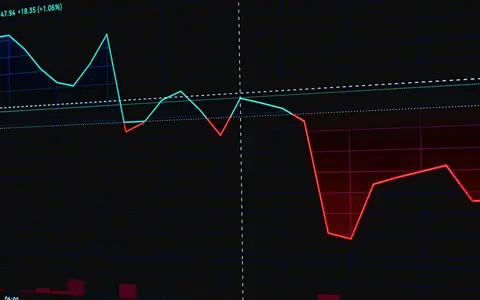
The market recovered a good part of what it had lost within hours. The suspension was limited to 90 days and did not extend to China, with which levies exceeded 100%, but it was enough to calm the immediate panic and to show how quickly things can change.
Anyone who sold at the lowest point crystallised a loss that, had they waited, might have been smaller. But that is not a general rule either: nobody knows in advance when the turn will come. That is why the key is not to guess the moment, but not to depend on having to decide just then, something achieved through prior planning. Someone with a long horizon who does not need the money in the short term can, by definition, bear those fluctuations better.
The lesson of the week
The week was a lesson about the cost of selling in panic, and about the importance of not having to sell at a bad moment. Having enough liquidity, not borrowing more than is prudent and having a plan defined in advance helps to avoid irreversible decisions under pressure.
A simple plan can include a reserve fund for emergencies, a calendar for reviewing the portfolio and clear criteria on when and why it would be changed. It also helps to discuss it with an adviser calmly, when markets are quiet. Nothing said here is a recommendation to buy or sell any particular asset: it is an invitation to prepare. Each person should adapt it to their situation, with the help of an adviser.
In moments of panic, the greatest asset is not being forced to act.
This article is general information. It is not legal, tax or investment advice, and it does not take anyone’s particular circumstances into account.