On 20 December 2024 the Labour Ministry, CCOO and UGT signed the agreement to cut the working week to 37.5 hours in 2025 with no reduction in pay. What it says and what is still needed for it to become law.

On Friday 20 December 2024, the second vice-president and Minister of Labour and Social Economy, Yolanda Díaz, and the general secretaries of CCOO, Unai Sordo, and of UGT, Pepe Álvarez, signed the agreement to cut the working week to 37.5 hours in 2025 with no reduction in pay. The current 40-hour week has been in force since 1983. CEOE and Cepyme did not sign: in November the Ministry had ended the negotiation with CEOE, which restated its opposition and asked for the cut to be made through collective bargaining rather than by law.
What the agreement says
The working week falls from 40 to 37.5 hours “on an annual basis”, with no pay cut. Existing collective agreements will have until 31 December 2025 at the latest to adapt. According to the minister, the measure would affect some 12 million workers whose hours exceed 37.5, and part-time workers as well. The Ministry points out that sectors such as hospitality, retail, agriculture and services have hours very close to the legal maximum set more than forty years ago.
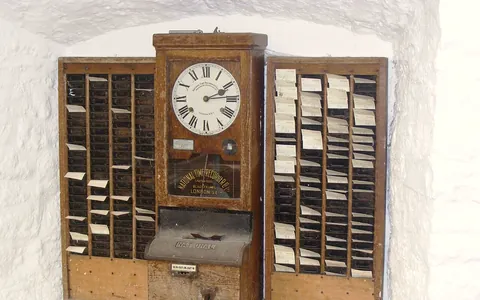
The second pillar is time recording. Employers will have to keep a daily time record that is digital, objective, reliable and accessible, which the Labour and Social Security Inspectorate and workers’ representatives can consult remotely. Until now it could be kept on paper. If there is no record or the data are falsified, it will count as one offence per worker affected, rather than one per company. The text also provides for an inalienable right to digital disconnection outside working hours: not answering communications outside working time may not have negative consequences for the worker, and collective bargaining will specify how it applies, including measures against “IT fatigue”.
What is missing
It is a political agreement, not a rule. For the 37.5-hour week to be mandatory a law is needed: the text must go through public consultation, the Council of Ministers and the Cortes, and Congress will not receive it until spring at the earliest, according to ARA. Díaz has set the goal of having it in force before the end of 2025.
Parliamentary support is not assured. The position of Junts was unknown, and Álvarez raised the matter with Carles Puigdemont in Brussels, according to ARA; the Ministry said it had begun contacts with all parties. Sordo acknowledged that the text may be amended and that the parliamentary passage will be difficult.
Within the government itself, the economy minister, Carlos Cuerpo, had asked for a transition period for SMEs and the self-employed, and the agriculture minister, Luis Planas, for gradual application. The agreement does not include the aid and rebates announced for SMEs and the self-employed, which the government could introduce during the passage of the bill. The unions believe the agreement would carry more weight with CEOE on board and hope it will change its position.
What to review
Although it is not yet mandatory, a company should work out what 37.5 hours would mean for its workforce and shifts: how many hours of work are lost per person, how they would be covered, with more hiring, reorganisation or overtime, and at what cost. It is also worth checking what the applicable collective agreement says and when it expires, because it is the collective agreement that would have to adapt before 31 December 2025 if the law goes ahead.
Time recording is the nearest issue. It is already compulsory and the Labour Inspectorate monitors it; a company that keeps it on paper can start considering a digital, objective and reliable system. Ask your employment adviser how it affects your workforce.
The 37.5-hour week is, for now, an agreement between three parties; for it to bind everyone a law is needed.
This article is general information. It is not legal, tax or investment advice, and it does not take anyone’s particular circumstances into account.