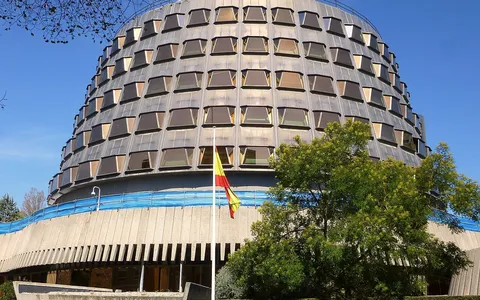
On 7 November 2023 the Constitutional Court rejected Madrid’s appeal and upheld the solidarity tax on large fortunes. What it taxes, who pays and what changes after the ruling.
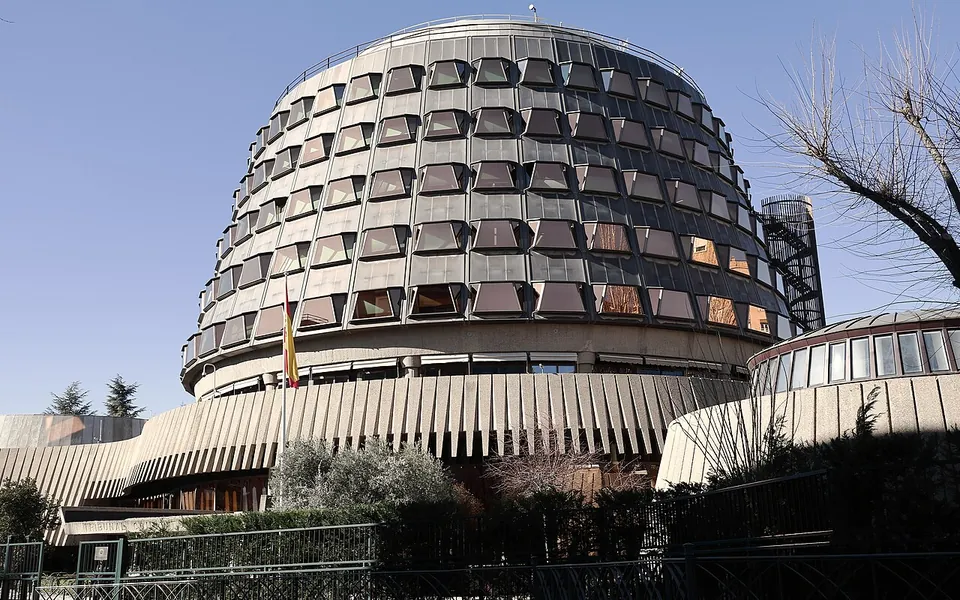
On 7 November 2023 the plenary of the Constitutional Court rejected the appeal by the Community of Madrid against the temporary solidarity tax on large fortunes, set out in Article 3 of Law 38/2022 of 27 December. The ruling (STC 149/2023, with Justice María Luisa Balaguer as rapporteur) was carried by seven votes to four. It is the first to resolve one of the appeals brought by regional governments against the tax; those of Andalusia, Galicia and Murcia were still pending.
What it taxes and who pays
The tax is a direct, personal tax that complements the wealth tax. It applies to individuals whose net wealth exceeds €3 million on 31 December, with the same taxpayers and the same exempt assets as the wealth tax. It does not apply in the Basque Country or Navarre, which have their own foral tax regimes, and it cannot be transferred to the regions: the State administers it.
The scale is that of the wealth tax, except that the first band, up to €3 million of taxable base, is taxed at 0%. Above that the rate is 1.7% up to €5,347,998.03, 2.1% up to €10,695,996.06 and 3.5% beyond. For residents the base is first reduced by an exempt minimum of €700,000, so in practice only net wealth above €3.7 million starts to pay.
The wealth tax actually paid is deducted from the result, and the sum of this tax, the wealth tax and personal income tax cannot exceed, for residents, 60% of the income tax base. The effect therefore depends on residence: someone living in a region that grants a 100% rebate on the wealth tax, such as Madrid, has nothing to deduct and bears the full amount; elsewhere the new tax acts as a top-up on what has already been paid. The law justified it with a twofold aim: to raise more revenue at a time of energy crisis and inflation, and to bring the burden in different regions closer together.
What the Court said
Madrid argued a procedural defect — the tax was introduced by an amendment to a bill on levies on energy companies and banks — and several substantive grounds: encroachment on its financial autonomy, breach of ability to pay and of the ban on confiscatory taxation, and lack of legal certainty. The Court rejected them all. On autonomy, it reasoned that the tax leaves intact the regions’ powers over the wealth tax — the exempt minimum, scale, deductions and rebates — and that Madrid cannot stop the State from taxing wealth that the region has left untaxed.
On confiscation, it recalled that a wealth tax would be confiscatory only if it exhausted the value of the assets, not the income they produce, and that the appeal did not show this effect. On retroactivity, it pointed out that the tax has no tax period: it accrues on 31 December, the first time was 31 December 2022 and the law had been in force since the 29th.
Nor, it added, is there a right to a tax regime that never changes. The four justices who voted against would have upheld the appeal for lack of connection between the amendment and the bill, for the effect on the regions’ financial and political autonomy and for legal certainty.
What changes
Ever since the tax was announced in September 2022, and since form 718 was approved in June 2023, there has been doubt over whether the Constitutional Court would strike it down. The ruling removes that doubt as regards the grounds raised by Madrid: the tax is constitutional. Those who filed for 2022 did so with the law in force, and the ruling does not alter those returns. The second accrual the law provides for is 31 December 2023, and the return will foreseeably be filed in 2024, within the period set by the Finance Ministry.
Looking ahead to 31 December, it is worth valuing assets under the wealth-tax rules, checking tax residence and exempt assets, and working out the wealth tax that will be deducted. Ask your tax adviser how it applies to your case. The ruling settles the question of its validity; the date that counts is still 31 December.
This article is general information. It is not legal, tax or investment advice, and it does not take anyone’s particular circumstances into account.