On 28 May 2023 Recep Tayyip Erdogan won Turkey’s presidential runoff with about 52% of the vote. The lira fell to a record low against the dollar; what is known and how markets reacted.
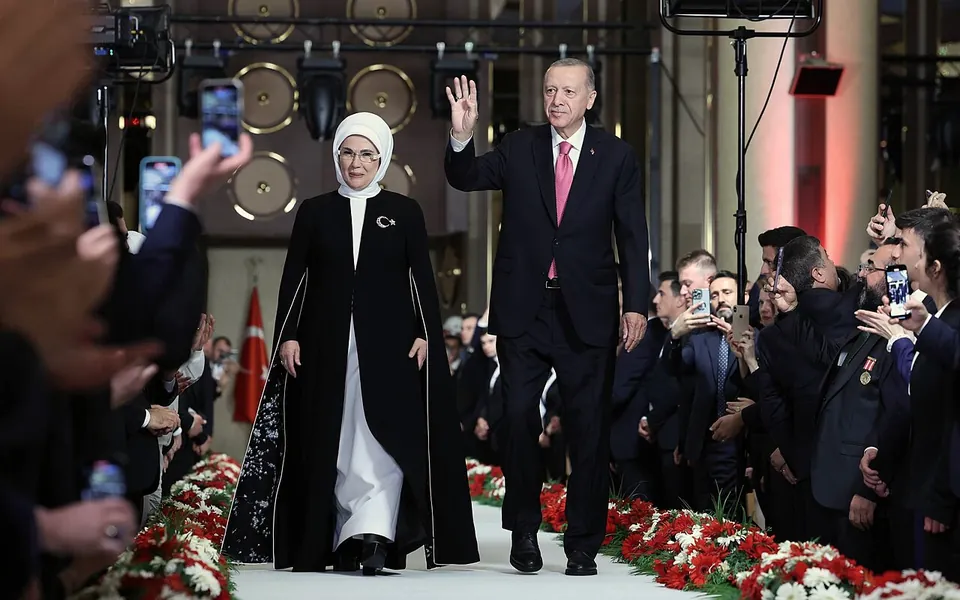
Turkey’s president, Recep Tayyip Erdogan, won the presidential runoff on Sunday 28 May 2023, the first presidential runoff in Turkey’s history, against the opposition leader Kemal Kılıçdaroğlu. With almost all votes counted, he took about 52.1% to his rival’s 47.9%, on a turnout of close to 85%. The results are still provisional: the Supreme Electoral Council has to confirm them in the coming days.
What is known
In the first round, on 14 May, no candidate won an absolute majority, so the top two went back to the polls. Parliamentary elections were held the same day, and Erdogan’s party and its allies won 323 of the 600 seats. Erdogan has governed Turkey since 2003, first as prime minister and, since 2014, as president, and he will now begin a new five-year term.
The new government will face several economic fronts. Official inflation reached 85.5% in October 2022, its highest in 24 years; it fell to 50.5% in March and to around 44% in April, although independent economists believe the real figure is higher. Turkey must also rebuild the areas hit by the February earthquakes, which killed about 50,000 people, and, according to Reuters, it spent tens of billions of dollars of reserves to slow the lira’s fall before the elections.
How markets reacted
On Monday 29 May the lira weakened to about 20 per dollar, a record low and its worst session in eight months, according to Al Jazeera. It has lost around 10% of its value so far this year, according to the Associated Press. Some analysts put the fall down to the confirmation of an unorthodox economic policy, with low interest rates despite high inflation.
Istanbul’s stock market reacted differently. The BIST 100 index closed the session up 4.1% and the banking index up 2.13%, after the falls in Turkish shares and dollar bonds that followed the first round. A rising stock market and a falling currency are not contradictory: Turkish shares are priced in lira, and a gain measured in lira is not the same as a gain measured in euros or dollars.
In his victory speech, Erdogan promised to bring inflation down to single digits and to strengthen growth, and said that eliminating the problems caused by rising prices was the most urgent issue. Investors were now waiting to learn the new government’s economic team and whether there would be any change in monetary policy.
Spanish banks’ exposure
In Spain, the best-known case is BBVA, which operates in Turkey through Garanti BBVA. According to its first-quarter 2023 report, the Turkey area contributed €277 million to the group’s attributable profit, which was €1,846 million, and those accounts apply hyperinflation accounting. The bank itself estimates that a 10% depreciation of the lira would take one basis point off its CET1 capital ratio, and explains that it hedges between 40% and 50% of the aggregate attributable profit it expects to generate over the next twelve months.
These figures date from 31 March and are best read as a reference, not a forecast: the final effect will depend on the lira’s path, on Turkish interest rates and on the hedges each institution holds. The second-quarter results will be the first quarterly figures after the elections.
After official confirmation, Erdogan will take the oath and form a government. The new government’s economic policy decisions will be the next thing to watch.
This article is general information. It is not legal, tax or investment advice, and it does not take anyone’s particular circumstances into account.