Luiz Inácio Lula da Silva won the 30 October 2022 run-off with 50.9% of the vote against 49.1% for Jair Bolsonaro. What is known and what it means for Spanish companies with business in Brazil.
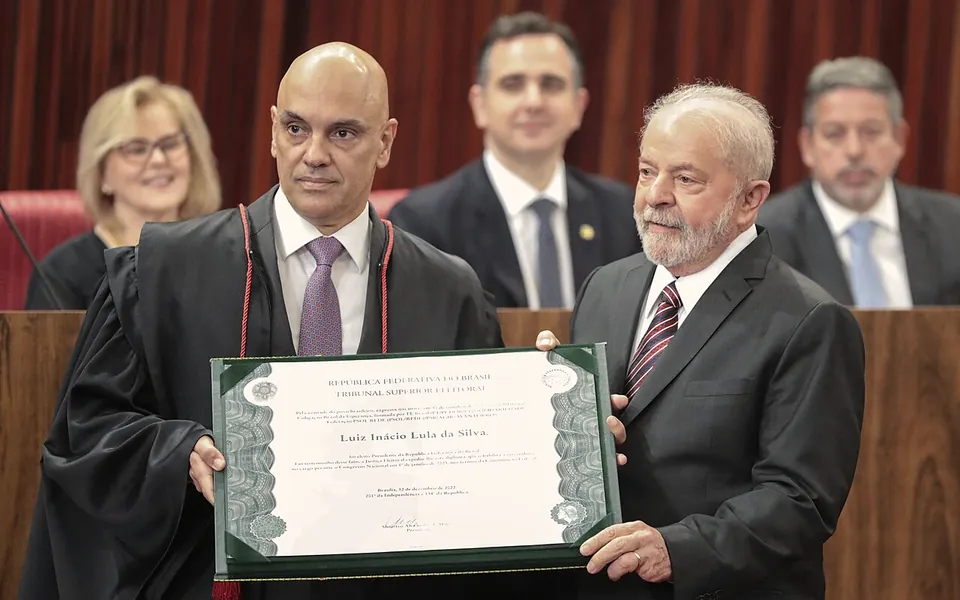
Luiz Inácio Lula da Silva, of the Workers’ Party, won the run-off of Brazil’s presidential election on Sunday 30 October 2022. With 100% of polling sections counted, according to the Superior Electoral Court (TSE), he received 60,345,999 votes (50.90%), against 58,206,354 (49.10%) for the sitting president, Jair Bolsonaro. The gap, of 2,139,645 votes, is the narrowest in a presidential election since the return to democracy. About 124 million people voted, close to 80% of the electorate.
Lula, aged 77, was already president of the country between 2003 and 2010 and returns to office twelve years after leaving it. His running mate, the former São Paulo governor Geraldo Alckmin, will be vice-president. In the first round, on 2 October, he had won 48.43% of the vote and Bolsonaro 43.20%. Bolsonaro is the first president not to win re-election since it was allowed, in 1997. Lula will take office on 1 January 2023.
A tight result and an open transition
During Monday 31 October, Bolsonaro had neither acknowledged the result nor spoken in public, and his communications minister told Reuters that he would not comment until Tuesday. Truckers and other protesters blocked roads in several states, including Mato Grosso, Rio de Janeiro and São Paulo, according to France 24. US President Joe Biden congratulated Lula on the same Sunday and described the elections as free, fair and credible.
Brazilian markets recovered the losses at the start of Monday’s session: the real rose 1.6% and the benchmark stock index 1.3%, while Petrobras fell 3.7%, according to Reuters. Lula’s team said it would send representatives to the COP27 climate summit, and the asset manager Nordea said it might lift its 2019 ban on buying new Brazilian government debt, according to France 24.
Spanish companies in Brazil
For almost thirty years Spain has been the second-largest foreign investor in Brazil, behind only the US, with an investment stock of more than $60 billion in 2021, according to the Spanish government. Telefónica operates in the country under the Vivo brand, Iberdrola controls the electricity company Neoenergia, and Santander’s Brazilian subsidiary is its biggest contributor to profit.
Santander earned €2,027 million in Brazil in the first nine months of 2022, 15.3% more than a year earlier, it reported on 26 October. Against the group’s €7,316 million of attributable profit, that is a little over a quarter (our calculation), and Brazil was again the country that contributed most to the group’s accounts.
What to review
With a change of government, companies with subsidiaries, customers or income in reais are watching the economic policy of the new team, which is yet to be announced. It is worth knowing how the exchange rate affects results and what hedging exists, and reviewing, in long-term contracts, the clauses on price adjustment, change of regulation and dispute resolution. If the company exports to Brazil or buys there, it is also worth reviewing the payment and collection terms and conditions in reais. Anyone with funds that have a weight in Brazil can check their exposure. Consult your adviser on how it applies to your case.
An orderly transition matters as much to Brazil as to those who do business there from Spain.
This article is general information. It is not legal, tax or investment advice, and it does not take anyone’s particular circumstances into account.