On 23 October 2022, after the 20th Communist Party Congress, Xi Jinping was re-elected general secretary for a third time. On Monday 24th, Hong Kong’s stock market fell 6.4%, its worst session since 2008.
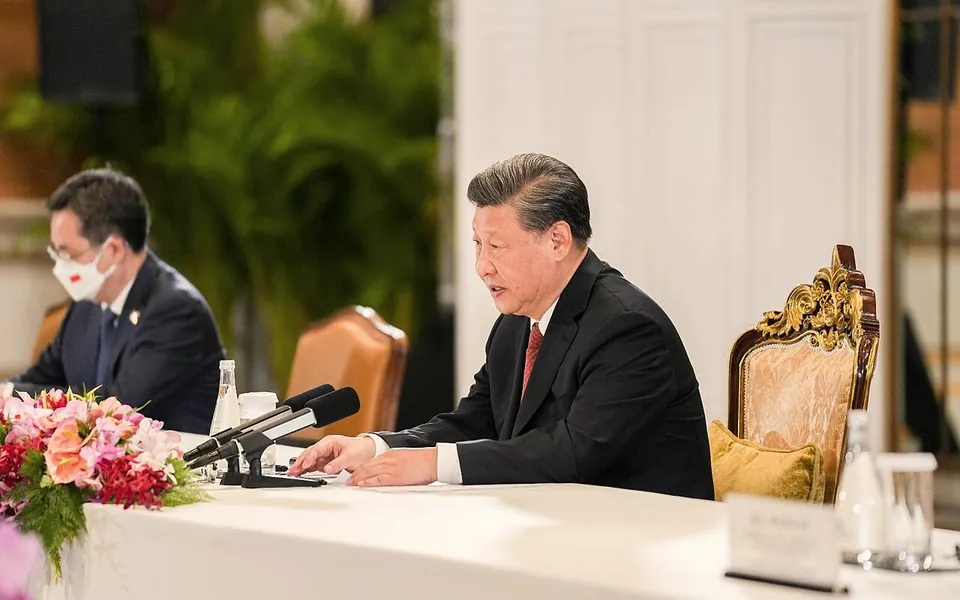
The 20th Congress of the Communist Party of China was held in Beijing from 16 to 22 October 2022. The day after it closed, on 23 October, the first plenary session of the new Central Committee re-elected Xi Jinping general secretary of the party, a post he has held since 2012, and chairman of the Central Military Commission, according to the communiqué of the official Xinhua agency. The session was attended by 203 members of the Central Committee and 168 alternate members. It is his third five-year term at the head of the party, something without precedent in recent decades.
Who makes up the new leadership
The Standing Committee of the Politburo, the core of power in the party, has seven members, in this order: Xi Jinping, Li Qiang, Zhao Leji, Wang Huning, Cai Qi, Ding Xuexiang and Li Xi. The Politburo as a whole has 24 members. Four of the seven members of the previous committee left it, among them Premier Li Keqiang, who is also missing from the new Central Committee list, and Wang Yang, chairman of the Chinese People’s Political Consultative Conference.
Several media outlets, such as the South China Morning Post, described the team as a group of leaders close to Xi. Party and state are different posts: Xi has been president of the People’s Republic since 2013, and the presidency is renewed at the annual session of the National People’s Congress, scheduled for March 2023, which will also formalise the change of premier. The two-term limit for that office was removed from the Constitution in 2018.
How the markets reacted
On Monday 24 October, the first session after the announcement, Hong Kong’s Hang Seng index closed down 6.4%, its worst day since the 2008 financial crisis, according to Reuters. The Hang Seng Tech index lost 9.7% to a record low, and Alibaba and Tencent each lost about 11%, according to the South China Morning Post. On the mainland, the CSI 300 fell 2.9% and the Shanghai Composite 2%.
The yuan also weakened: offshore it fell below 7.30 to the dollar, a record low, and onshore it reached its weakest level in almost fifteen years, according to Reuters.
Analysts quoted in the press attributed the fall to fears that the “zero COVID” strategy and the pressure on private companies will continue for another five years, to a leadership more concentrated around Xi, and to weak economic data. The Hang Seng had already fallen below 17,000 points in October on doubts about China’s growth and COVID outbreaks.
Among the voices gathered by Reuters, Ales Koutny of Janus Henderson read the change as China moving from economic pragmatism to political ideology; Andrew McCaffery of Fidelity International spoke of a capitulation phase among investors; and Yuan Yuwei of Water Wisdom noted that the main short-term negative remained the harshness of COVID policy.
What to bear in mind
A single session does not make a trend. For a business or a family here, the effect depends on exposure: portfolios or funds with weight in the Chinese and Hong Kong stock markets, purchases from Chinese suppliers, customers or subsidiaries in the country, or income in yuan. It is worth knowing how much China weighs in what you hold, in which currency it is quoted and what hedging exists. This note is for information only and is not investment advice. Consult your adviser on how it applies to your case.
The concentration of power gives China political continuity, but leaves open the question of the economic policy to come.
This article is general information. It is not legal, tax or investment advice, and it does not take anyone’s particular circumstances into account.