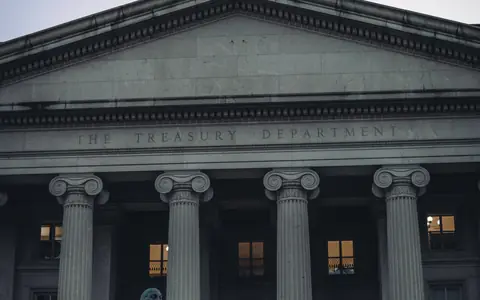
- On 3 November the United States held its presidential election; the count dragged on for days and Joe Biden was declared the winner on 7 November.
- Markets fear uncertainty more than any particular result: once it is clear, they absorb it and move on.
- A well-built strategy is designed to withstand news, not to react to every item.
On 3 November 2020 the United States held its presidential election. The result was not immediately clear: the count dragged on for several days, until Joe Biden was declared the winner on 7 November. During that time, markets traded with the uncertainty typical of a very close vote, in which each update of the results could change the perception of who would govern. It was, in short, a period of little information and a lot of speculation.
For anyone with savings or investments, an election in the world’s largest economy raises a natural question: will this change my portfolio? The reasonable answer is that what matters is not guessing the result, but understanding how to respond to uncertainty and which decisions are worth taking, or not taking, when the headline of the day changes every few hours. That reflection holds for any significant election.
A long count
A count this long keeps citizens, companies and investors in suspense, because until the last vote is counted any headline can change the picture. Those days show how an election becomes an economic matter: not because of the result itself, but because of the time it takes to know it.
A long count is not necessarily a sign of problems: it follows the procedures of each territory and the volume of votes to be counted and verified. But it introduces a period in which the result is unknown, and that information vacuum is precisely what most bothers those who take economic decisions. While it lasts, it is common to see price movements that are later reversed. Those who operate with short horizons suffer them more; those who invest with long horizons can watch them from a greater distance.
Why markets worry
Markets fear uncertainty more than any particular result. When it is not known who will govern, or with what majorities, it is hard to assess the effect on taxes, regulation or public spending. Once the result is clear, markets absorb it and move on to something else. Often, the real impact of a political change takes time to show and depends on what is finally approved.
This explains why volatility tends to concentrate in the days before and after an uncertain event, and why it usually diminishes when the picture clears. For someone investing with a long-term perspective, those movements are noise rather than signal. The risk lies in turning a temporary swing into a permanent loss by acting under emotional pressure. Emotions tend to push towards late decisions, taken when the price has already moved.
Neither changing nor improvising
For a long-term investor, elections rarely justify changing a strategy that is well built. Decisions taken because of the day’s news tend to be worse than those thought through beforehand. If the strategy reflects each person’s goals, horizon and risk tolerance, it should not depend on the outcome of a vote. This holds whatever the specific result and whatever opinion one may have of it.
That does not mean ignoring it. It is reasonable to review periodically whether the portfolio is still aligned with goals, whether liquidity is sufficient for expected needs and whether there are excessive concentrations in a country, a sector or an asset. But that review should be done calmly, with the adviser and with the facts of one’s own situation, and not in the heat of an election night. A good strategy includes prior rules on when it is reviewed and who takes part in the decision.
A sound strategy is designed to withstand news, not to react to every item.
This article is general information. It is not legal, tax or investment advice, and it does not take anyone’s particular circumstances into account.