On 23 December 2019 Boeing announced the departure of its chief executive, Dennis Muilenburg, and named David Calhoun to succeed him. The 737 MAX crisis has cost the company its top executive.
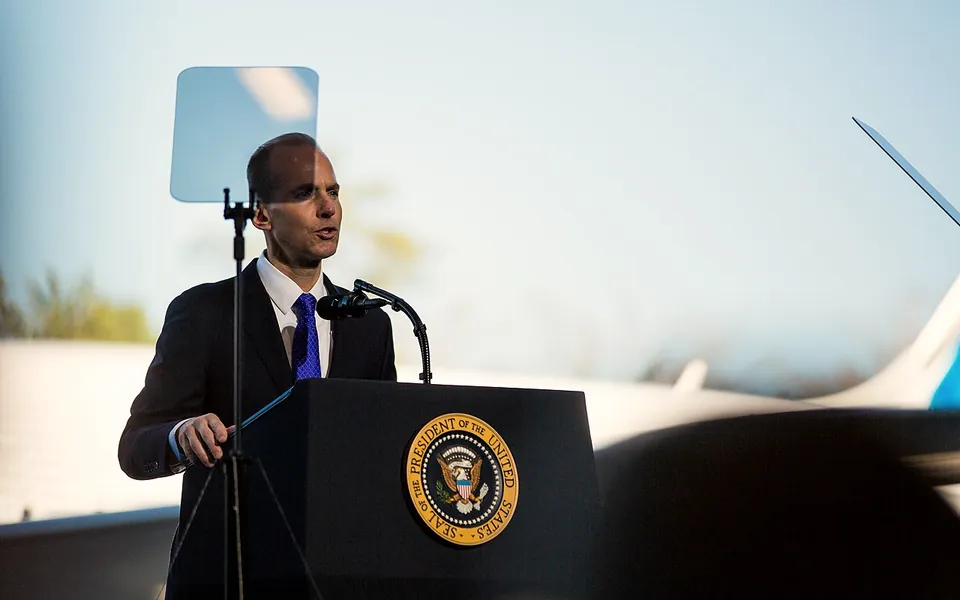
On Monday 23 December 2019, Boeing’s board of directors announced that Dennis Muilenburg was leaving, with immediate effect, his posts as president and chief executive and his seat on the board. The board named David Calhoun, until now non-executive chairman of the board, as chief executive and president, taking up the post on 13 January 2020, once he has finished leaving his commitments outside Boeing. Until then the chief financial officer, Greg Smith, will run the company on an interim basis, and Lawrence Kellner, already a director, becomes non-executive chairman of the board.
Resignation or dismissal
Boeing announced the departure as a resignation, but the board itself explained that a change of leadership was necessary to restore confidence while the company works to repair its relationships with regulators, customers and other stakeholders. The company also committed to full transparency and proactive communication with the US Federal Aviation Administration (FAA), other regulators and its customers. That is why outlets such as Bloomberg and The Jakarta Post spoke of a dismissal.
It is not an isolated move. In October the board had already removed Muilenburg as chairman of the board, with the post going to Calhoun as non-executive chairman, on the grounds that he could then concentrate on returning the 737 MAX to service. Now the chief executive changes too.
The 737 MAX crisis
The 737 MAX has been grounded since March 2019, after two accidents, in October 2018 and March 2019, that caused 346 deaths and that are attributed to a software fault. The regulators have not yet authorised it to fly again. Meanwhile Boeing carried on building it and has about 400 aircraft in storage. Boeing is, together with Airbus, one of the world’s two big makers of commercial aircraft, and the 737 MAX is a central part of its business, so the grounding affects the airlines waiting for their aircraft and its whole supply chain.
On 16 December the company announced that it will temporarily suspend 737 production from January to prioritise delivery of the stored aircraft. The change also comes a few days after the Starliner capsule, which Boeing is developing for NASA, failed to reach the altitude needed to dock with the International Space Station on its first uncrewed test flight.
What the change shows
Kellner highlighted Calhoun’s wide experience in the industry and his record of leadership, and Calhoun said he strongly believes in the future of Boeing and the 737 MAX. For family businesses and boards of directors, the case illustrates three ideas: the board must act when the confidence of regulators and customers is lost; separating the roles of chairman and chief executive, as Boeing did in October, is one way of sharing responsibility; and succession is worth having ready, because here the replacement was already a board member who knew the company.
Still to be settled are the date on which the 737 MAX will fly again, which depends on the regulators, and the effect of the production halt on the supply chain and on the company’s accounts. Calhoun takes up the post on 13 January.
A crisis of confidence is not resolved by a change at the top alone, but the change is the first signal that regulators and customers look for.
This article is general information. It is not legal, tax or investment advice, and it does not take anyone’s particular circumstances into account.