Decree 609/2019 of 1 September and the central bank’s Communication A 6770 restrict access to foreign currency until 31 December. What they limit and what it means for Spanish companies doing business there.
On Sunday 1 September 2019 the Argentine government signed emergency decree 609/2019, and the same day the Central Bank of the Argentine Republic (BCRA) issued Communication “A” 6770. From then until 31 December 2019, buying foreign currency, taking it out of the country or sending profits abroad is subject to limits and prior approvals.
What has happened
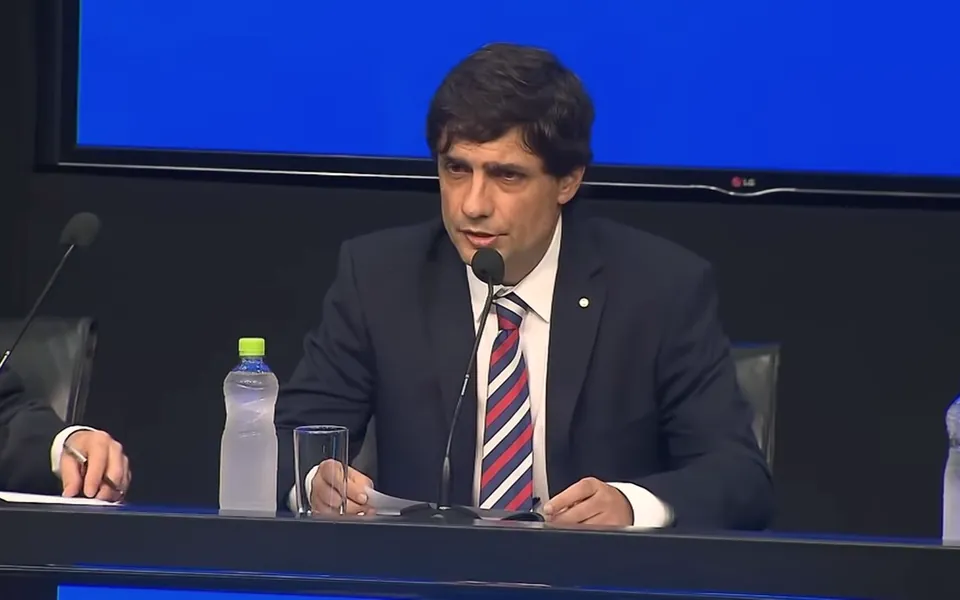
The measure comes four days after the “reprofiling” of the debt. On 28 August, Treasury Minister Hernán Lacunza announced that the maturities of short-term government securities (Letes, Lecaps, Lecer and Lelink) would be extended, and Decree 596/2019, published in the Official Gazette on 29 August, set the timetable: 15% is paid on the original maturity date, 25% after 90 days and the rest 180 days after the first payment. In general, the decree does not reach individuals who already held those securities and keep them, nor bonds issued under foreign law.
Decree 609/2019 does not set the limits itself; it instructs the central bank to do so. Article 1 requires that, until 31 December 2019, the proceeds of exports of goods and services come into the country in foreign currency or be traded on the foreign exchange market; Article 2 empowers the central bank to decide when buying foreign currency and transfers abroad require prior authorisation, using objective criteria and distinguishing between individuals and legal entities; and Article 3 allows it to issue rules to stop the measure being circumvented through government securities or other instruments.
What the central bank restricts
Communication “A” 6770 turns those principles into specific rules. Anyone exporting goods under a shipping permit officialised from 2 September must bring in and settle the proceeds on the local exchange market within 15 calendar days, for transactions with related companies or certain products, or 180 days for the rest, and in any case within 5 business days of collection. Exporters of services also have 5 business days.
Legal entities, funds and trusts need the BCRA’s prior approval to buy foreign currency for assets abroad and to post collateral for derivatives transactions. Resident individuals may do so without permission up to US$10,000 a month across all institutions, and any transaction above US$1,000 a month at a single institution must be paid by debit to local accounts. Non-residents need authorisation above US$1,000 a month.
The central bank also requires prior approval to send profits and dividends abroad, to repay financial debt abroad early (more than three business days before maturity) or import debt, and to pay for services from related companies abroad, or overdue or on-demand import debts with those companies, above US$2 million a month per resident client. New financial debts abroad must be settled on the local market, access to the market to repay foreign-currency debts between residents entered into from that date is prohibited, and anything that does not comply with the rules falls under the foreign exchange criminal regime.
What it means for Spanish companies
For a Spanish company with a subsidiary, partner or customers in Argentina, the most immediate consequence is that the money generated there may take longer to leave. A subsidiary that wants to repatriate dividends now needs the central bank’s prior approval, and the same applies to payments for services to the parent or other group companies and, above the threshold mentioned, to imports between related companies. The communication does not say what criteria will be used to grant that approval.
Anyone exporting to Argentina or with dollar financing there should look above all at timing: payments to unrelated suppliers abroad, on their due date, are not among those requiring prior approval, but advance payments are, and new debts must be settled on the local market. The rules apply until 31 December 2019, and during that time the timetable for collections and payments may be less predictable. It is worth reviewing which group cash flows depend on the Argentine exchange market (pending dividends, intra-group balances, foreign-currency debt and export receipts) and what contracts provide if an approval is delayed. For your own situation, ask your adviser.
An exchange control does not change what is owed, but it does change when and how it can be paid and collected.
This article is general information. It is not legal, tax or investment advice, and it does not take anyone’s particular circumstances into account.