On 26 June 2017 the boards of Bankia and Banco Mare Nostrum approved the merger plan: one Bankia share for every 7.82987 BMN shares. What role the FROB plays and what approvals are still missing.
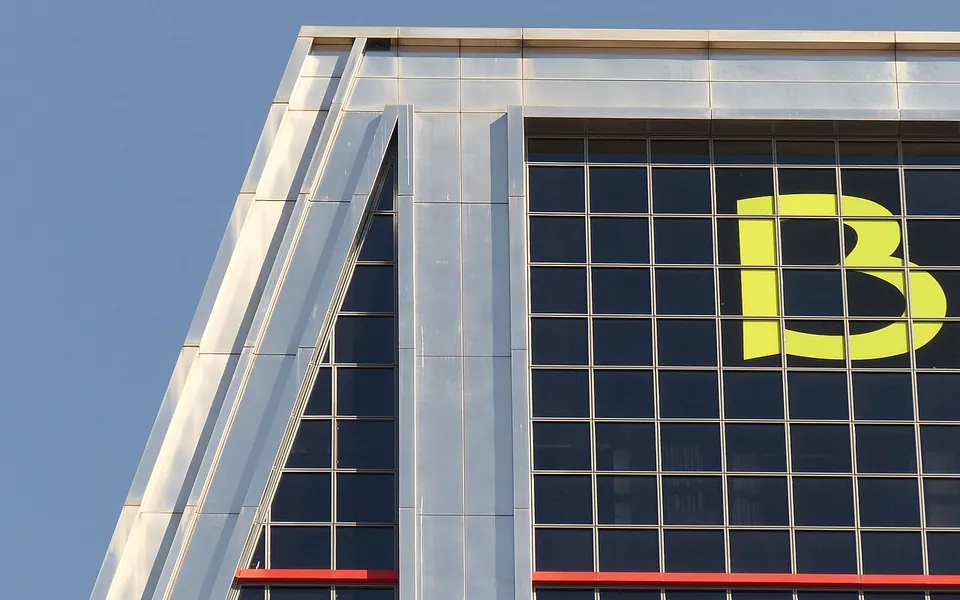
The boards of directors of Bankia and Banco Mare Nostrum (BMN) approved the common merger plan on 26 June 2017, under which Bankia absorbs BMN, which is dissolved without liquidation and transfers all its assets to Bankia. BMN reported it to the National Securities Market Commission (CNMV) the following day. According to the plan itself, the resulting bank would be the fourth largest in Spain by total assets.
Exchange and valuation
BMN shareholders will receive one ordinary Bankia share, with a nominal value of one euro, for every 7.82987 BMN shares, with no cash compensation. Taking Bankia’s closing price on 23 June 2017 as the reference, the exchange values BMN at €825 million, 0.41 times its tangible book value at 31 March 2017 (€2,011 million). Bankia will increase its capital with new shares reserved for BMN shareholders, up to a maximum of 205,684,373, and according to the press former BMN shareholders would hold 6.7% of Bankia.
Morgan Stanley and Rothschild, for Bankia, and Deutsche Bank and JP Morgan, for BMN, issued opinions that the exchange is fair from a financial point of view for the shareholders of each bank, and BMN’s committee of independent directors reported favourably on the ratio. A single independent expert, appointed by the Valencia Commercial Registry, will also verify the exchange ratio.
The FROB’s role
The Fund for Orderly Bank Restructuring (FROB) is the majority shareholder of both banks, with more than 65% of each, as a result of public aid to the financial sector. On 15 March 2017 its steering committee had decided that the merger was the best strategy for optimising the recovery of that aid ahead of a future sale. To avoid conflicts of interest, the FROB did not take part in the deliberation of BMN’s board or vote on the plan, although it expressed a positive assessment.
At Bankia, its chairman, José Ignacio Goirigolzarri, explained on 21 June that the three executive directors would not vote on the merger because they also sit on the board of Banco Financiero y de Ahorros (BFA), the parent company, where conflicts of interest are voted.
What is still missing and what to review
The plan must go to the general shareholders’ meetings of both banks, and the document sets no date for them. After that, the merger’s effectiveness is subject to authorisation from the Minister of Economy, Industry and Competitiveness and to any needed from the Directorate-General for Insurance and Pension Funds, the CNMV or the National Commission for Markets and Competition. Once authorised, the notarial deed, its entry in the Valencia Commercial Registry and the exchange will follow, and the new shares will be admitted to trading on the Madrid, Barcelona, Valencia and Bilbao stock exchanges.
Goirigolzarri said on 21 June that the timetable was unchanged and that the deal would close between the third and fourth quarters of 2017. Bankia will also propose to its shareholders’ meeting that a BMN director join its board. The registered office will remain in Valencia, according to Goirigolzarri, and BMN’s employees will move to Bankia with their employment rights; after the merger, Bankia will analyse overlaps and carry out whatever labour restructuring it considers necessary.
For a BMN customer, the merger means that Bankia takes the place of their bank in all their contracts. If Bankia worsened the terms of a product with no fixed maturity, it must give two months’ notice and you could cancel it at no cost; it is worth reading the bank’s communications about accounts, cards and direct debits when they arrive. Anyone with deposits at both banks should add up their balances: the Deposit Guarantee Fund covers €100,000 per holder and per bank, and once the merger is complete the limit will apply to the total held at the resulting bank. For your own situation, ask your adviser.
In a merger, the exchange ratio sets the price; the shareholders’ meetings and the authorisations set when anything changes for the customer.
This article is general information. It is not legal, tax or investment advice, and it does not take anyone’s particular circumstances into account.