A magnitude 6.8 earthquake struck the Marrakech area in the Atlas Mountains on 8 September 2023. The provisional toll on 11 September exceeded 2,800 dead. Spain sent rescue teams.
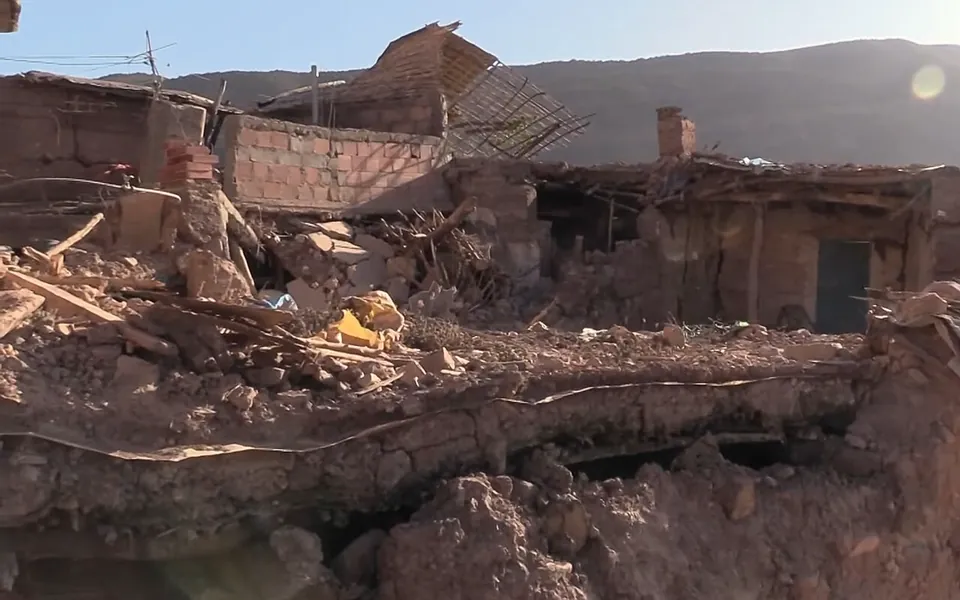
A magnitude 6.8 earthquake struck late on Friday 8 September 2023 in Morocco’s Atlas Mountains. The epicentre was in Al Haouz province, about 70 kilometres south-west of Marrakech. Morocco’s national scientific and technical research centre (CNRST) put the magnitude at 7.
A toll that is still provisional
The first official toll, on Saturday 9 September, spoke of 1,037 dead and 1,204 injured, with 542 deaths in Al Haouz and 321 in Taroudant. Two days later, the Moroccan Interior Ministry’s count for Monday 11 September was 2,862 dead and 2,562 injured, and the figures were still rising. The worst-hit provinces were Al Haouz and Taroudant, and there were also victims in Marrakech, Ouarzazate, Azilal and Chichaoua. These are provisional figures that the authorities continue to update.
Many buildings collapsed in whole or in part, and witnesses reported damage in Marrakech’s historic city, where the minaret of the Bab Ailan mosque fell. People gathered in the squares for fear of aftershocks.
International aid
Morocco authorised rescue teams from only four countries: Spain, the United Kingdom, Qatar and the United Arab Emirates. Germany’s offer, for example, was not accepted. Morocco formally requested help from Spain in the early hours of Sunday 10 September, and that same day a team from the Military Emergencies Unit (UME), with 56 soldiers and four dogs, left Zaragoza air base on an Air Force A400 aircraft; it was the first international team to reach Marrakech. The Community of Madrid also sent 30 people from its emergency team (ERICAM), with firefighters, medical staff and four rescue dogs. Before Morocco’s authorisation, Spain had activated the State Committee for International Civil Protection Support so that it could respond immediately if Rabat asked, and more UME personnel were due to be sent from Madrid, Málaga and Catalonia.
Ministers Nadia Calviño and José Manuel Albares, speaking from the G20 summit in New Delhi, promised help “for as long as necessary”, and Albares said it would be as much as Morocco needed, because the urgent task was to find people alive. The Ministry of Foreign Affairs said no Spanish casualties had been recorded and told Spaniards in the area that they could go to the Instituto Cervantes in Marrakech; it was also helping them rearrange their travel and talking to Iberia and Binter about extra flight capacity. Reconstruction aid would be channelled later through the Spanish Agency for International Development Cooperation (AECID).
Ties with Spain
Spain is Morocco’s leading supplier: according to ICEX, Spanish exports reached €11,748 million in 2022, up 23.6% on the previous year, with a 14% share of Moroccan imports. It has been so since 2012, according to a report by the consultancy AFI, ahead of France. Because of that trade weight, what happens in Morocco matters to Spanish businesses.
With the figures still provisional, the priority of the rescue teams remained finding people alive, a race against the clock in the first days after an earthquake; damage assessment and reconstruction will come later.
The figures for this earthquake are not yet final.
This article is general information. It is not legal, tax or investment advice, and it does not take anyone’s particular circumstances into account.