Two earthquakes of magnitude 7.8 and 7.5 struck southern Turkey and northern Syria on 6 February 2023. The provisional toll on 9 February exceeded 20,000. What is known and how it affects businesses.
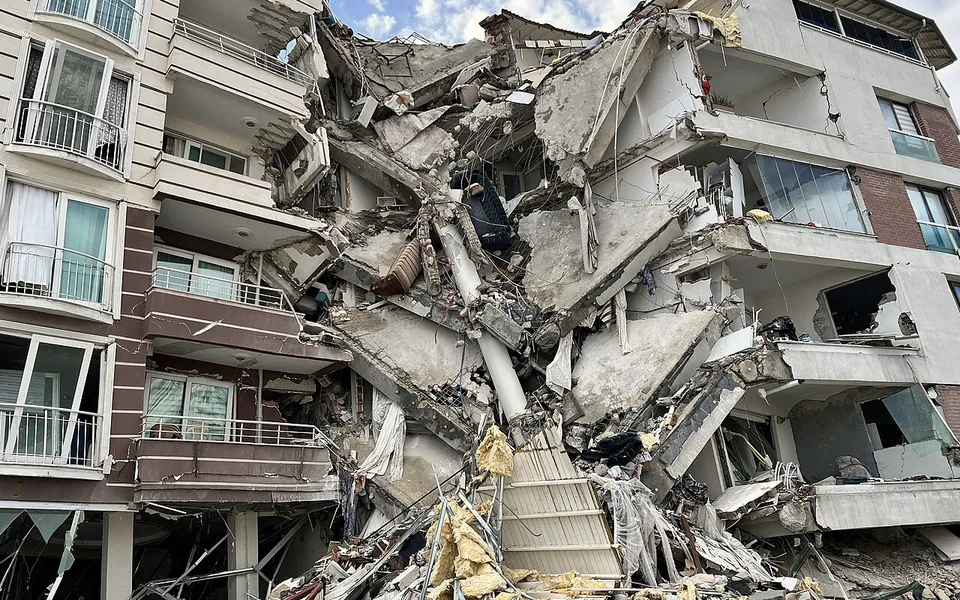
In the early hours of Monday 6 February 2023, a magnitude 7.8 earthquake shook southern Turkey, near Gaziantep, and was felt as far away as Lebanon and Cyprus. A few hours later, a second quake of magnitude 7.5 struck the same region. At least 78 aftershocks had been recorded before the second one, according to the United Nations.
What is known
The casualty count, provisional, kept rising. On the night of Thursday 9 February, Turkey’s disaster management agency spoke of 17,406 dead in Turkey, and in Syria the figure was 3,317, bringing the total above 20,000. For reference, the 1999 Marmara earthquake killed about 17,500 people, according to Al Jazeera. On Monday the United Nations spoke of nearly 2,000 dead; three days later the total exceeded 20,000.
President Recep Tayyip Erdogan declared a three-month state of emergency, approved by parliament, in the 10 affected provinces in the south of the country, and spoke of “the disaster of the century”. According to Erdogan, hundreds of thousands of people are taking part in relief efforts, and the cold, snow and rain make the search for survivors under the rubble harder. Turkey raised its level 4 alert, which means requesting international assistance, and the World Health Organization activated emergency medical teams.
In rebel-held north-west Syria, about 4.1 million people already depended on humanitarian aid before the earthquake. On Thursday six UN trucks entered from Turkey, the first United Nations convoy since the quake, and Secretary-General António Guterres asked for access through more than one border crossing. Syria is also facing a cholera outbreak. Germany, France and the United Kingdom announced aid of €26 million, €12 million and £3 million respectively, and Ukraine sent 88 rescuers to Turkey.
The economic impact
The Istanbul stock exchange suspended trading on Wednesday 8 February, after its main index fell 7% in the first 90 minutes despite two automatic circuit breakers. It cancelled that day’s trades and closed for five days, according to Reuters. The index had fallen about 14% since Monday.
Damage estimates are very provisional and unofficial. Professor Ahmet Ercan calculated losses of between $35 billion and $50 billion, and the risk analysis firm Risklayer about $20 billion. Three economists consulted by Reuters thought the earthquake could cut Turkey’s growth by between 0.6% and 2%.
Turkey is an important trading partner for Europe: according to the European Commission, the EU is its largest goods trading partner, for both imports and exports. So, although the damage is concentrated in the south of the country, European companies with suppliers, customers or staff in the area are following the situation closely.
What to review
Companies with activity in the affected provinces can start with the basics: checking the situation of their people and equipment in the area, and talking to suppliers and carriers about delivery times and alternative routes. It is also worth reviewing what their contracts say about force majeure and delays, and what business-interruption and transport insurance policies cover, as they may have limits or exclusions for natural disasters. Anyone wishing to help can do so through recognised organisations.
Today’s figures are provisional and are likely to keep growing.
This article is general information. It is not legal, tax or investment advice, and it does not take anyone’s particular circumstances into account.