On 8 January 2023 China ended entry quarantine and began reopening its borders after three years. What changes for travellers and what effect it may have on the economy and commodities.
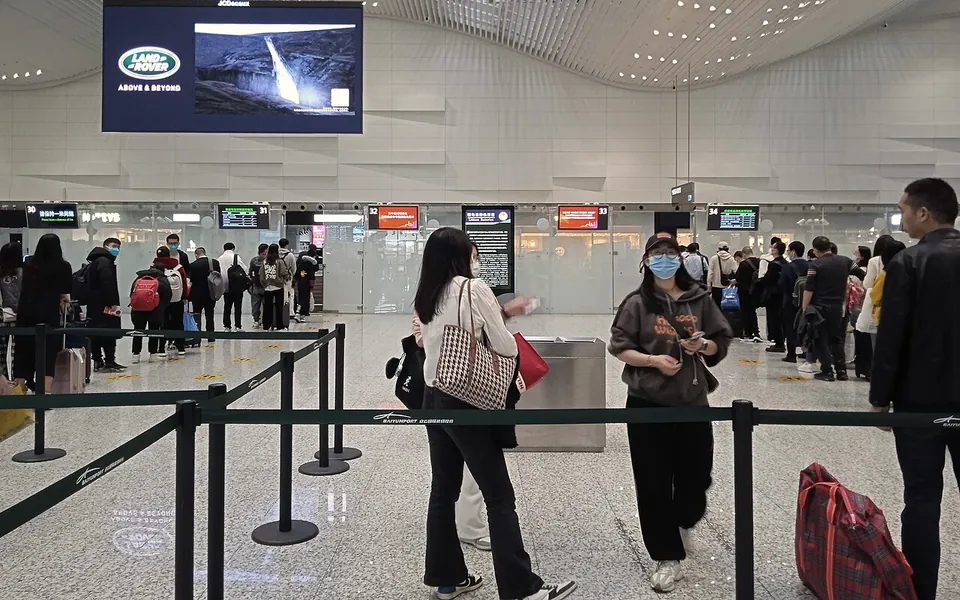
On Sunday 8 January 2023 China ended compulsory quarantine for people arriving from abroad. It was one of the last pieces of the “zero Covid” policy that had kept the country largely closed for nearly three years, and it came after the rest of the health restrictions were lifted in December. The first flights landed in Guangzhou and Shenzhen shortly after midnight: the 387 passengers from Singapore and Toronto were not tested on arrival or put through five days of isolation in designated facilities.
What exactly changes
The measure was announced on 26 December 2022 in a circular from the National Health Commission. From 8 January Covid-19 is managed as a Class B infectious disease and centralised quarantine is cancelled; it used to be five days in a hotel and three at home. Two requirements remain: a negative test taken within 48 hours before departure and the wearing of masks on board.
Limits on the number of international passenger flights are also lifted, including the so-called “five-one” policy and the load-factor cap, and visa facilities for foreigners are announced. On the Hong Kong border, the first phase of reopening lets up to 60,000 Hong Kong residents a day enter mainland China; more than 410,000 had already registered by Saturday, according to Hong Kong’s public broadcaster.
Travel and tourism
China said it would resume in an orderly manner both outbound travel by its citizens and the issuing of passports. Searches for flights abroad from China rose by 80% compared with the previous year, according to data gathered by the press, and Thailand, Japan, South Korea, the US and Australia were the most searched destinations.
Foreign tourists, however, still cannot enter: the borders remain closed to tourism and only business or family visits are allowed. More than a dozen countries have imposed compulsory tests on travellers from China, measures that Beijing called “unacceptable”. Spain requires passengers on flights from mainland China to show an EU digital Covid certificate or a negative test, with an initial control period until 15 February.
The effect on the economy and commodities
The reopening is read as a possible boost to demand in the world’s second-largest economy, a big consumer of commodities. On Monday 9 January Brent rose by almost 3%, to about $81 a barrel, and WTI by almost 3.5%, to about $76, after falling more than 8% the previous week, its worst start to a year since 2016. Analysts cited expectations of strong jet fuel demand around Lunar New Year. It is the figure for a single session and may change.
China’s Ministry of Transport expects more than 2 billion passenger trips during the 40-day Lunar New Year travel season, which starts on 21 January: 99.5% more than a year earlier, though 70.3% of those recorded in 2019.
It is wise not to assume an immediate effect. Some media pointed to concern that the rise in travel could cause new infections, and the real pace of China’s recovery will depend on factors not yet known. Anyone with suppliers or customers in China may review delivery times, price-review clauses and business-travel schedules, bearing in mind the health controls that remain in force at origin and destination.
A reopening opens up possibilities; its real effect will show in the data of the coming weeks.
This article is general information. It is not legal, tax or investment advice, and it does not take anyone’s particular circumstances into account.