Queen Elizabeth II died on 8 September 2022 at Balmoral, aged 96. Charles III has been king since that day, and her state funeral will be held at Westminster Abbey on 19 September.
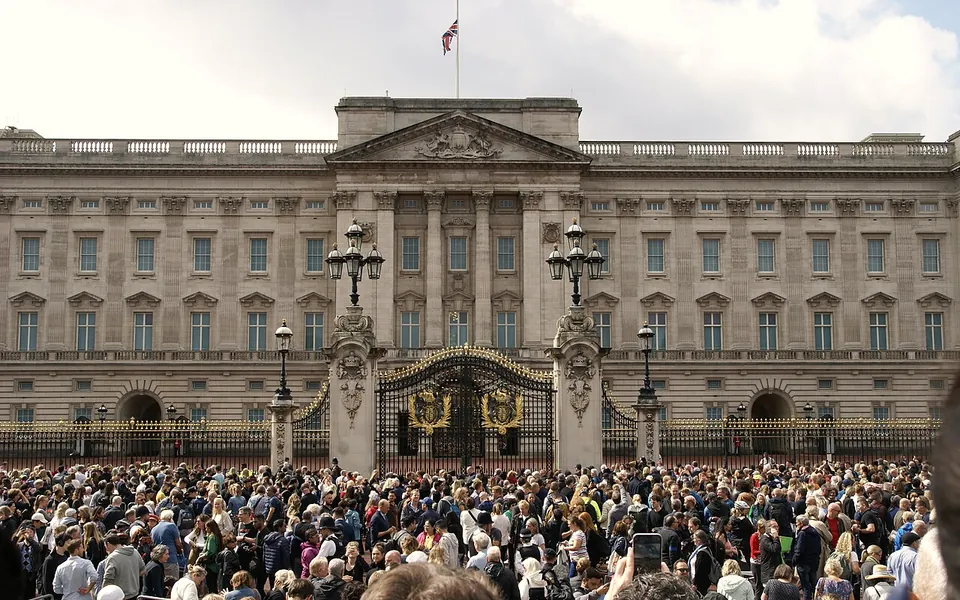
Queen Elizabeth II died on Thursday 8 September 2022 at Balmoral Castle in Scotland, aged 96. She had come to the throne on 6 February 1952, and her reign of more than seventy years is the longest in British history; her Platinum Jubilee had been celebrated in June. Buckingham Palace announced the death in the evening and said that the King and the Queen Consort would stay at Balmoral that night and return to London the next day.
The succession
There is no interregnum in the United Kingdom: Charles, until then Prince of Wales, became king at the moment of his mother’s death, taking the name Charles III. On Saturday 10 September the Accession Council met at St James’s Palace and formally proclaimed him; the proclamation, read from a balcony overlooking Friary Court, names him sovereign of the United Kingdom and its other realms and territories, and Head of the Commonwealth.
The Accession Council is a ceremonial body made up of Privy Counsellors, senior office-holders and Commonwealth representatives. It does not decide who reigns, because the succession is automatic: it proclaims the new sovereign formally. The proclamation was read again in the City of London and, on Sunday 11 September, in other places across the United Kingdom.
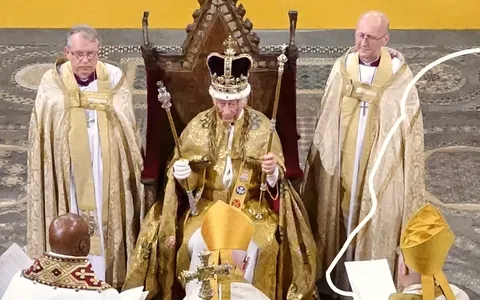
On 9 September, in his first address to the nation and the Commonwealth, Charles III pledged to serve with loyalty, respect and love and to uphold the constitutional principles on which the country rests. He is also head of state of other realms, such as Canada, Australia and New Zealand. The coronation is a separate ceremony, held after the proclamation.
The mourning timetable
The United Kingdom is in a period of national mourning that will last until the day of the funeral. According to Buckingham Palace, the coffin will go first to Edinburgh: on Monday 12 September it will be taken in procession from the Palace of Holyroodhouse to St Giles’ Cathedral, and on Tuesday 13 it will be flown to London. On Wednesday 14 it will be carried from Buckingham Palace to Westminster Hall, where the lying-in-state will be open to the public for the four days before the funeral.
The state funeral will be held on Monday 19 September at 11am at Westminster Abbey. On 10 September the UK government announced that the day will be a bank holiday across the United Kingdom and will mark the last day of national mourning. A bank holiday gives no legal right to time off: that depends on what each employer and employee agree.
Practical effects
For anyone with business, investments or family in the United Kingdom, the effects are mainly about the calendar. The Bank of England postponed its monetary policy meeting, scheduled for 15 September, by a week and will announce its decision at 12 noon on 22 September, in light of the period of national mourning. And on 19 September, as on any bank holiday, it is wise to allow extra time for payments and procedures that depend on British institutions.
The British monarchy has no executive powers: the government of Prime Minister Liz Truss and Parliament keep their authority, and the succession does not in itself change the rules that affect people and businesses with ties to the United Kingdom.
The succession was immediate; the programme of ceremonies, already set, will run until 19 September.
This article is general information. It is not legal, tax or investment advice, and it does not take anyone’s particular circumstances into account.