On 28 October 2021 Mark Zuckerberg announced that Facebook’s parent company will be called Meta. What changes, what does not, and why the announcement came amid the row over leaked documents.
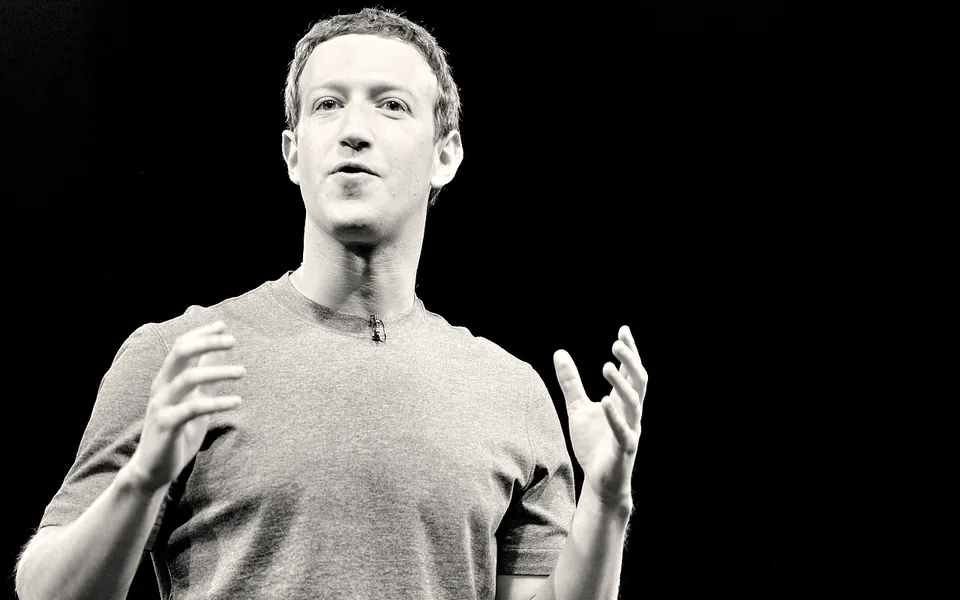
On 28 October 2021, at the virtual Connect conference, Facebook’s founder and chief executive, Mark Zuckerberg, announced that the parent company is adopting a new name: Meta. He said the time had come for a brand that covers everything the group does and that, from now on, the company will put the metaverse first rather than Facebook. The change concerns the group’s name, not its structure. According to the company itself, its corporate structure does not change, and Facebook, Instagram, Messenger and WhatsApp keep the same names. Meta added that the announcement does not change how it uses or shares data.
What the metaverse is
Meta describes the metaverse as an evolution of the social experiences that already exist online, partly extended into three dimensions. Zuckerberg called it the successor to the mobile internet and said he hopes it will reach a billion people within the next decade. It is, therefore, a long-term project: today it is above all a promise, and neither its timetable nor its demand is assured.
The bet has a cost. The company said it would spend about $10 billion next year developing those technologies and that, starting with its fourth-quarter 2021 results, it will report two segments separately: Family of Apps, its family of applications, and Reality Labs, its virtual and augmented reality division. Shareholders will thus be able to see how much each part of the group spends and earns. The group had set up a dedicated metaverse team in July 2021.
The background: leaked documents and an outage
The announcement came after some difficult weeks. The former employee Frances Haugen gave internal documents to news outlets, lawmakers and regulators in the United States; according to reports based on them, the company knew about the harm some of its apps caused and sometimes failed to fix it. Haugen testified before a Senate committee on 5 October. On Monday 25 October, on the analyst call after its results, Zuckerberg rejected those conclusions.
On 4 October, in addition, Facebook, Instagram and WhatsApp were down for several hours around the world. The company blamed a faulty configuration change on the routers of its backbone network and said it had no evidence that user data had been compromised.
According to the US public broadcaster NPR, the Facebook brand carried the wear of several controversies: Russian interference in the 2016 election, the Cambridge Analytica case and the Haugen documents. Zuckerberg focused his message on the company’s future.
What to know
The name is new; the company, its shareholders and its legal obligations are the same. Anyone with exposure to the company, directly or through funds, will see the name change and, on 1 December, the ticker symbol (from FB to MVRS), but not the issuer. Anyone who uses the apps for business, for example for advertising or customer service, need not notice anything: the apps keep their names.
What does change is the information available: with the new division into segments it will be possible to follow how much the group is investing in the metaverse and what it returns, something worth reading with the figures in hand and without taking the timetable for granted.
The company’s name has changed; what remains to be shown is whether the metaverse will be more than a promise.
This article is general information. It is not legal, tax or investment advice, and it does not take anyone’s particular circumstances into account.