On 5 October 2021 the coalition government announced an agreement on the future housing law: rents in stressed-market areas, an IBI surcharge on empty homes and tax bonuses. What is known and what is missing.
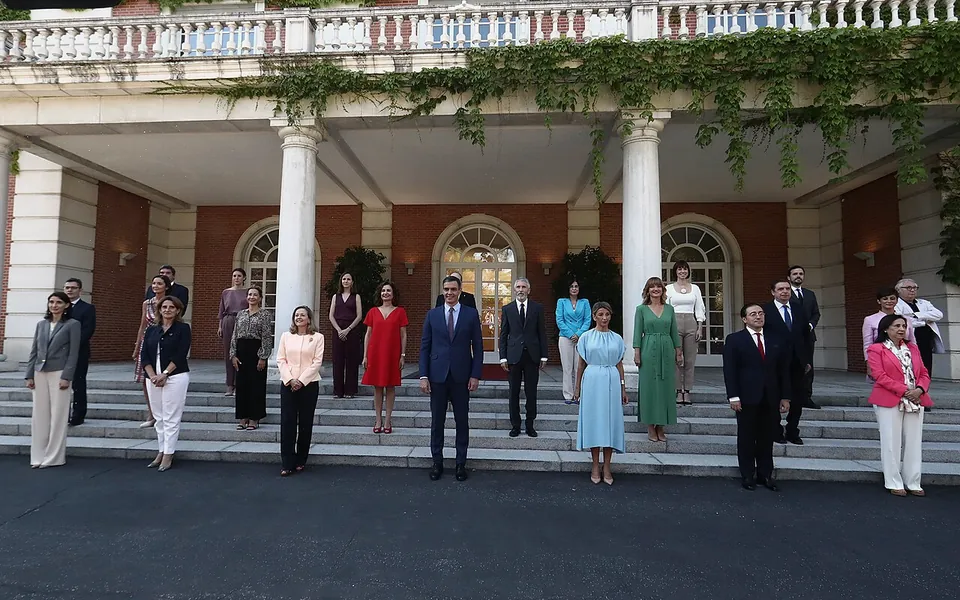
On Tuesday 5 October 2021, the two partners in Spain’s coalition government, the PSOE and Unidas Podemos, closed the agreement on what the government spokesperson described as the first national housing law of the democratic era, a commitment in their coalition pact that had been pending for months. The negotiation had stalled the day before over the obligations of large owners. It was announced by the spokesperson, Isabel Rodríguez, and the minister for the Presidency, Félix Bolaños, after the Council of Ministers, together with the agreement on the 2022 General State Budget.
What was announced
The spokesperson said the law will serve to contain and reduce rents and to increase the public housing stock significantly, and that 30% will be reserved for subsidised housing, half of it for social rent. Unidas Podemos sources told Europa Press that the reserve would apply to 30% of new developments. The same day, the Council of Ministers approved another housing package, worth €5.5 billion, for refurbishment and social housing, which is a separate measure.
On rents, according to the Unidas Podemos sources quoted by Europa Press, prices will be regulated to bring down the rents of large owners, defined as those with ten or more homes, with reference indices applying to all contracts in stressed-market areas. Small owners would be offered a price freeze and tax incentives so that they, too, cut rents. Bolaños confirmed a package of tax bonuses for owners who lower the rent compared with the previous contract, which can reach 90% of the rental income they receive, and explained that stressed areas will be declared at the request of the regional governments.
On empty homes, Bolaños explained that there will be an IBI surcharge on homes left unoccupied for a prolonged period and that the government will enable town halls to apply it. The figure of up to 150% comes from Unidas Podemos sources (the party wanted 200% and the PSOE argued for 75%), not from an official figure given that day. Spain still has no national definition of an empty home; some regions do: in Catalonia, since January 2020, it is one that has been permanently unoccupied without justified cause for more than two years.
What is still unknown
There is no text and no fixed timetable. Bolaños said there was not yet a date for approving the bill, which would reach the Council of Ministers in the coming weeks before going to the Cortes, and that the detail would be given when it was presented. Still pending are the criteria for declaring a stressed-market area.
Application will depend largely on regions and town halls. Bolaños made clear that the law does not repeal regional housing laws but coexists with them, in answer to a question from TV3 about the Catalan law in force. A journalist raised that the PP was criticising the measure as market intervention, and the mayor of Madrid, José Luis Martínez-Almeida, said his city will not apply the IBI surcharge. An expert from Pisos.com doubted its effectiveness, because there is no official census of empty homes.
What to review
Until the bill is published, nothing changes for rental contracts or for owners. Four points are worth following once the text is known: how a large owner is defined (the ten-home threshold matches that of the anti-eviction decree), what criteria will be required to declare a stressed-market area, how an empty home is defined and from when vacancy is counted, and whether your region or town hall decides to apply the measures. Ask your adviser how this applies to your case.
There is a political agreement, but not yet a law: the timetable and the details will decide everything.
This article is general information. It is not legal, tax or investment advice, and it does not take anyone’s particular circumstances into account.