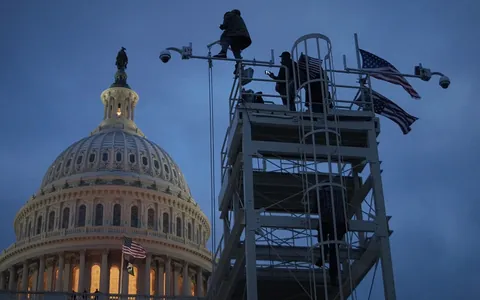
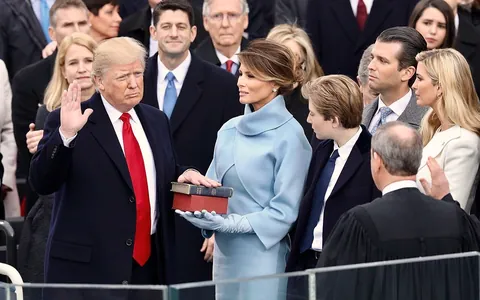
Joe Biden took office on 20 January 2021 as US president and signed orders that day on the pandemic, climate and immigration. What they contain and what is still pending in Congress.
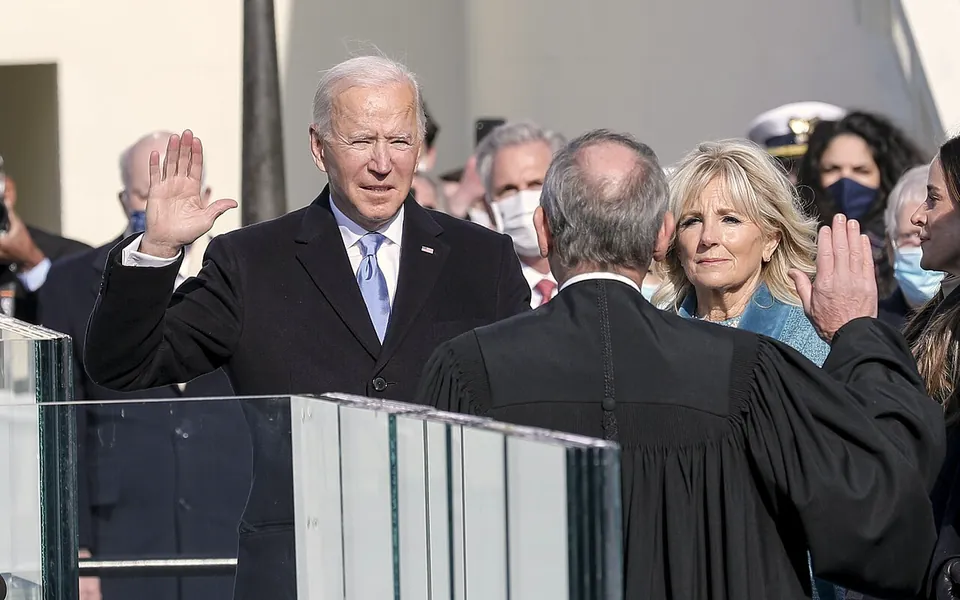
Joe Biden took the oath as president of the United States at noon on Wednesday 20 January 2021, at the Capitol in Washington, before Chief Justice John Roberts. Shortly before, Kamala Harris had been sworn in as vice president by Supreme Court Justice Sonia Sotomayor, becoming the first woman to hold the office.
Because of security concerns after the attack on the Capitol on 6 January, the ceremony took place almost without spectators: the National Mall was closed to the public, there was no usual parade to the White House and up to 25,000 National Guard troops were expected in the capital. Donald Trump did not attend: he left the White House that morning for Palm Beach, Florida.
The speech
In his address, Biden made unity the common thread. He held a moment of silence for the roughly 400,000 Americans who had died of COVID-19 and described the recent violence at the Capitol as an attempt to stop the work of democracy, declaring that “democracy has prevailed”.
The first orders
That same day he signed about fifteen decisions, according to the US press. On the pandemic, one order requires masks and physical distancing in federal buildings and on federal land, and for federal employees and contractors, and the process of leaving the World Health Organization was halted. On climate, the United States will again be a party to the Paris Agreement: the instrument was deposited with the United Nations and membership takes effect 30 days later. Biden also revoked the presidential permit for the Keystone XL pipeline and asked agencies to review decisions of the past four years that harmed public health or the environment.
On the economy and immigration, the White House asked the relevant agencies to consider extending the federal eviction moratorium and the foreclosure moratoriums on federally backed loans until at least 31 March, and the pause on federal student loan payments until at least 30 September. Biden repealed the entry bans on travellers from several mainly Muslim countries, ended the national emergency declaration used to fund the border wall and paused its construction, and signed a memorandum to preserve the DACA programme. His chief of staff also ordered a pause on new federal rules so they can be reviewed.
The $1.9 trillion rescue plan, whose details the White House published on 20 January, includes $1,400 cheques per person, a $400 weekly supplement to unemployment insurance, $20 billion for a national vaccination programme and a proposal to raise the federal minimum wage to $15 an hour. These are proposals that Biden is asking Congress to approve quickly.
What is still pending
Executive orders and memoranda are decisions the president takes within his powers: they can be reviewed by another order or challenged in court, and they do not replace legislation. Matters with the greatest economic reach, such as the rescue plan, require the approval of Congress. Anyone with business or investments in the United States can follow the changes by subject: climate and energy policy, federal rules awaiting review and aid linked to the plan. This note is informational and does not assess the effect of any measure on a particular investment.
The inauguration closes a transition; the first-day orders only open the agenda.
This article is general information. It is not legal, tax or investment advice, and it does not take anyone’s particular circumstances into account.