On 29 June 2019, at the G20 in Osaka, Trump and Xi agreed to resume negotiations and to hold off on new tariffs for now. What changes, what stays the same and what it means for firms trading with China or the US.
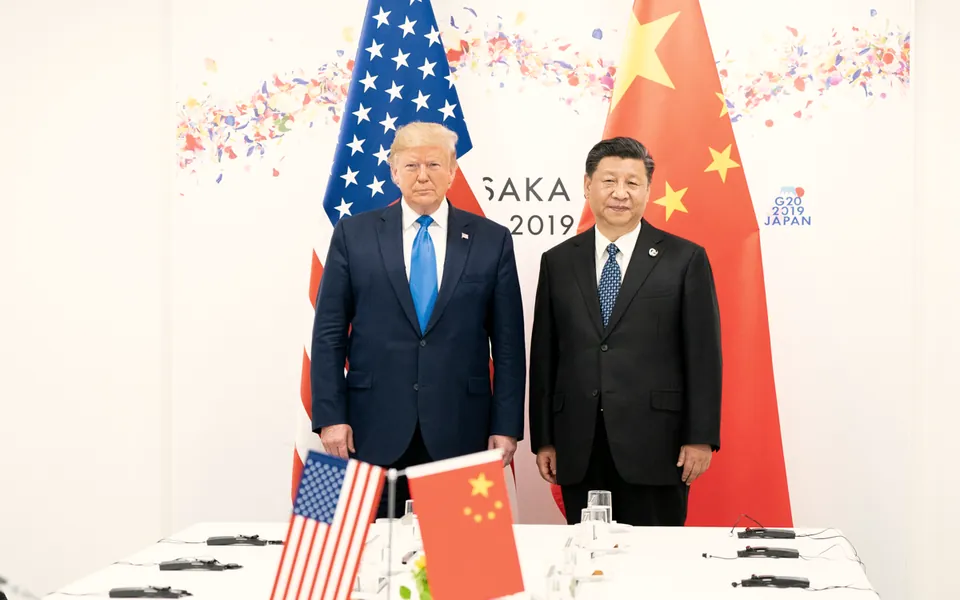
Donald Trump and Xi Jinping met on Saturday 29 June 2019 in Osaka, on the sidelines of the G20 summit, for about 80 minutes, according to Chinese media. Afterwards both governments announced that they are resuming trade negotiations, interrupted since May, and that the United States will not impose new tariffs for now. Trump said the talks were back on track.
Talks had broken down in May, amid a US tariff increase on $200 billion of Chinese goods. Beijing responded by raising its own on $60 billion of US goods, drew up a list of foreign companies it deemed unreliable and threatened to restrict rare-earth exports. Trump and Xi had spoken by phone on 18 June and agreed to meet in Osaka.
What was agreed
According to China’s Xinhua agency, the presidents agreed to restart trade consultations on the basis of equality and mutual respect. Trump specified that the tariffs he had threatened on another $300 billion of Chinese imports will not go ahead for now. Existing ones remain while talks continue: the United States applies 25% to about $250 billion of Chinese goods, and China has responded with tariffs on about $110 billion of US goods.
Trump added that China will buy more agricultural products, but neither he nor China’s foreign ministry gave figures: Beijing merely said that negotiators will address the specific issues. Farm purchases matter because Beijing’s retaliatory tariffs concentrated on those products and hit farmers in the US heartland.
The other sensitive point was Huawei, the Chinese manufacturer that Washington put on its trade blacklist in May, which in practice stopped US companies from selling to it. Trump said they will be able to do so “where there is not a national security problem”, but he did not take the company off the list and said the matter will be left until the end of the negotiation.
What it means for businesses
The truce prevents, for now, tariffs from reaching a new list of products, but it does not give back the costs already being paid by those who import from China or export to that market. For Spanish companies with supply chains or customers in both countries, the effect may be mostly indirect: the price of components, delivery times and their customers’ investment decisions.
Since no figures were set out and the agreement is only a pause, it is sensible to prepare for both scenarios: that talks advance or that tariffs rise again. In practice, that means knowing where each component comes from, what price-review clauses contracts contain and how much room the exchange rate leaves. It also helps to talk to key suppliers and customers about how they would share a possible increase in costs.
A fragile pause
It is the second truce in seven months. The first, agreed on 1 December 2018 at the G20 in Buenos Aires, set a 90-day pause that did not end in a deal and led to the tariff increase of May. The United States accuses China of appropriating technology and pressing foreign companies to hand over trade secrets, which Beijing denies, and those grievances remain unresolved.
A truce slows the escalation, but it does not resolve the conflict that caused it.
This article is general information. It is not legal, tax or investment advice, and it does not take anyone’s particular circumstances into account.