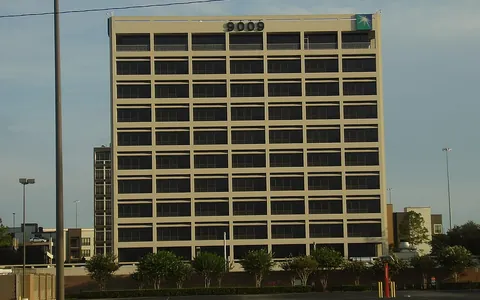
On 9 April 2019 Saudi Aramco placed $12 billion in its first bond issue, with demand far above the amount, and its prospectus revealed its 2018 results for the first time.
On 9 April 2019, Saudi Aramco, Saudi Arabia’s state oil company, priced its first international bond issue: $12 billion in five tranches of senior unsecured notes, under its global medium-term note programme. The bonds will be listed on the regulated market of the London Stock Exchange and closing was expected on 16 April. Aramco dropped a floating-rate tranche it had planned.
The issue
The tranches are: $1 billion at 2.75% maturing in 2022, $2 billion at 2.875% in 2024, $3 billion at 3.5% in 2029, $3 billion at 4.25% in 2039 and $3 billion at 4.375% in 2049. The ten-year tranche was priced 105 basis points above US Treasuries and 12.5 basis points below what investors demanded for Saudi government debt of similar maturity, according to Bloomberg.
Demand was the big news. According to Bloomberg, orders exceeded $100 billion at their peak and ended at $92 billion after some requests were pared back; they were strongest for the longer-dated bonds with higher yields. Arab News, citing company sources, spoke of the largest demand ever for an emerging-market bond issue. The $92 billion of requests against $12 billion issued shows that a large share of the orders was not filled.
The rating agencies rated the bonds in line with the Saudi state: A1 by Moody’s and A+ by Fitch, according to Argaam. Bloomberg adds that Moody’s highlighted Aramco’s low debt relative to its cash flow and likened it to an AAA-rated company.
What the prospectus revealed
The prospectus that accompanied the issue, circulated in early April, was the company’s first and showed its audited accounts for the first time. Net income for 2018 was $111.1 billion, against $75.9 billion in 2017, which makes it, according to Bloomberg, the most profitable company in the world. It produced 13.6 million barrels a day of hydrocarbons in 2018, of which 10.3 million were crude, and its gross refining capacity was 4.9 million barrels a day.
On 27 March, Aramco had announced the purchase of 70% of the petrochemicals company SABIC from the Saudi sovereign fund for $69.1 billion, with closing expected in 2020. In addition, its chairman, Energy Minister Khalid al-Falih, spoke of a permanent presence for the company in the bond and equity markets; the international stock-market listing, by contrast, remained postponed, according to Arab News.
Why it matters
For Aramco, the issue opens a source of funding in international debt markets and requires greater transparency: it now publishes audited accounts. For the Saudi state, whose budget depends heavily on the company, it is a gauge of how international investors see it; an analyst at Bloomberg Intelligence warned that this fiscal dependence could widen the bonds’ spread over time.
Anyone following these markets can look at objective elements: the maturity and coupon of each tranche, the credit rating, the fact that these are senior unsecured notes issued by the company, and the evolution of prices in the secondary market. A bond from a state oil company combines credit risk, exposure to the oil price and country risk.
An issue with heavy demand says how much interest there is in a company; it does not say how the company will fare in future.
This article is general information. It is not legal, tax or investment advice, and it does not take anyone’s particular circumstances into account.