The Generalitat’s official gazette published on 14 December 2018 the amendment to the Metropolitan General Plan reserving 30% of developments of more than 600 m² for protected housing. Which works it covers, from when and with what exceptions.
The Official Gazette of the Generalitat of Catalonia (DOGC) published on 14 December 2018 the decision of the Urban Planning Subcommittee of the municipality of Barcelona, adopted on 5 December, giving final approval to the amendment of the Metropolitan General Plan (PGM) for obtaining protected public housing on consolidated urban land. The Subcommittee, provided for in the Barcelona Municipal Charter, brings together representatives of the Generalitat and the City Council. The municipal proposal was given initial approval on 18 June and, after the period for objections, provisional approval at the plenary session of 28 September. The decision is enforceable from its publication, that is, from 14 December.
Which works it covers
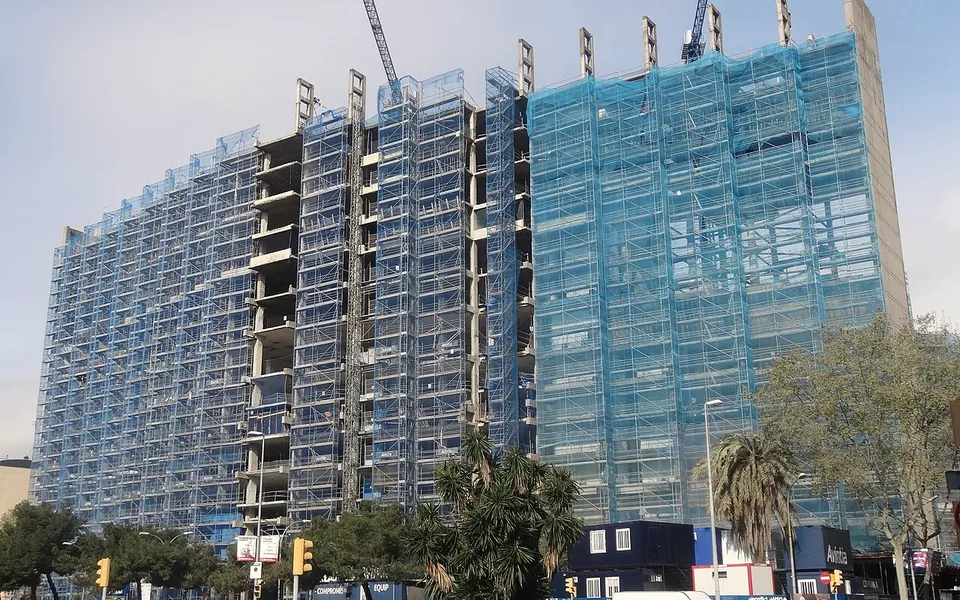
The reserve applies to multi-family housing developments on plots with more than 600 m² of potential residential floor area, in the case of new builds or major refurbishments. 30% of that floor area must go to protected housing under the general regime, or another regime that housing rules treat as equivalent, and those homes must, as a rule, be in the same building. New builds include construction from scratch and extensions of more than 600 m² that create new homes.
The plan defines a major refurbishment as a global intervention in the whole building that also increases the floor area, the volume or the number of homes, alters the structure, changes the main use or redistributes the space within the homes; also the replacement of the building even if the façade is kept, and refurbishments that, simultaneously or successively within five years, cost 50% or more of building an equivalent new building. Repairs and maintenance do not count.
Exempt, in general, are plots resulting from urban development units that have not yet been built on and, under the heritage catalogue of the districts, plots with protection grades A and B, and grade C where the refurbishment keeps the building type and does not increase the number of homes.
From when, and the transitional regime
The obligation applies to licences applied for from 14 December 2018; it does not apply to those filed before that date. For two years, until 14 December 2020, it also does not apply to the licences of anyone who proves, in a public document, a purchase of the property between 1 July 2016 and the initial approval of the plan, in June 2018. If the purchase was between 1 January and 30 June 2016, the 30% applies, unless an economic study validated by the City Council shows that it makes the operation unviable: in that case the lower percentage that makes it viable applies, and none if that percentage would leave a protected area below the legal minimum. After the two years, all new builds and major refurbishments are subject to it.
The licence is conditional on the provisional classification of the homes as protected; for first occupation, the final classification is needed and the protected status must be entered in the Land Registry for each home, and it is kept on transfer. Those homes are subject to the Administration’s pre-emption rights, of which the City Council may be the beneficiary.
What it means for developers and owners
The City Council estimates that the measure will generate about 334 new protected homes a year, 30% of the 1,114 built each year between 2008 and 2016 on consolidated urban land, and that more than half would be in central districts. It says 75% of the population could apply, and that the Generalitat sets the prices: about €510 a month to rent or €136,000 to buy for an 80 m² flat.
For developers, 30% of the floor area is sold or let at regulated prices and the rest stays on the open market. Anyone buying a plot or a building to build or refurbish substantially will have to include that reserve in the project’s calculations, and those with operations under way must check whether the exceptions and their dates apply. For owners, the reserve affects the larger works, not partial refurbishments or maintenance. The decision may be appealed to the Administrative Chamber of the High Court of Justice of Catalonia within two months of its publication.
Barcelona becomes, according to the City Council, the first city in Spain with a reserve of this kind; the dates of the licence and of the purchase will decide whom it reaches.
This article is general information. It is not legal, tax or investment advice, and it does not take anyone’s particular circumstances into account.