On 18 October 2018 Barcelona City Council and the Junta Constructora signed the agreement to regularise the works on the church. What the Junta pays, what remains to be approved and what it teaches about building licences.
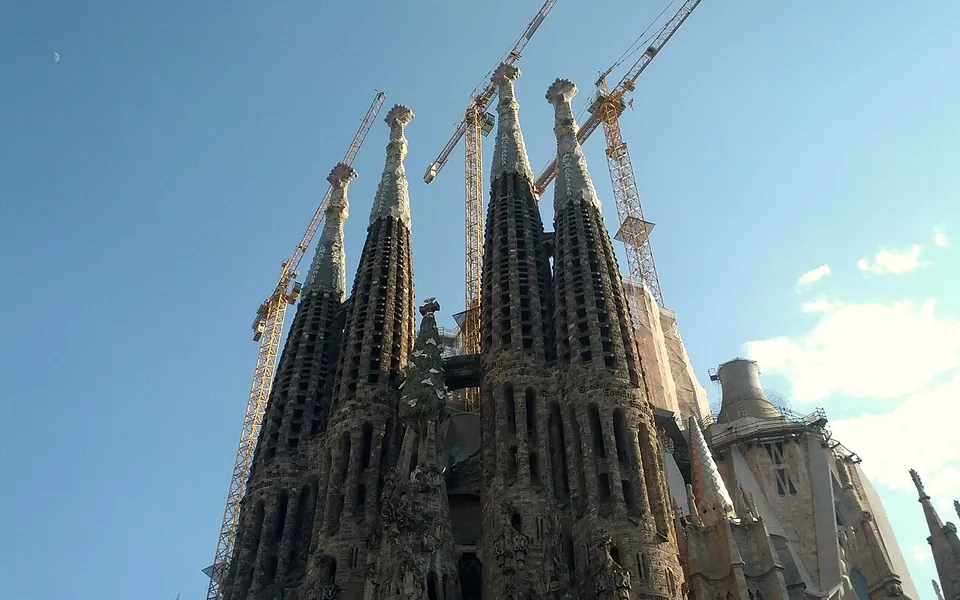
On Thursday 18 October 2018, the mayor of Barcelona, Ada Colau, and Esteve Camps, delegate chairman of the Sagrada Família’s Junta Constructora (the body in charge of building the basilica), signed an agreement to regularise the works on the basilica and for it to help pay the costs it generates in its surroundings. The City Council itself recalls that the matter goes back a long way: in 1885 a licence was requested from the council of Sant Martí de Provençals, and the situation had not been regularised since.
The €36 million
The Junta will contribute €36 million over ten years towards urbanisation, mobility, public transport and maintenance of the public space around the basilica. According to the City Council, €22 million goes to public transport (€2.2 million a year, calculated on the roughly 4.5 million visitors the church receives each year); €7 million to metro accessibility, so that a joint commission can study a direct access to the church, a new outside entrance or improvements to the existing entrances at Sagrada Família station and reduce crowding; €4 million to redevelop the streets of Marina, Provença, Sardenya and Mallorca, with projects to be defined in a participatory process with residents; and €3 million (€300,000 a year) to cleaning, surveillance and civic officers.
The agreement sets other conditions. The church will keep its current visitor ratio until the works finish, expected in 2026, and the maximum capacity afterwards will be studied by the monitoring commission. The main uses will be religious and cultural; commercial use is limited to a small shop selling products related to the church, accessible only from inside.
What is missing: the licence
The agreement does not grant the licence: it opens the way. The City Council will process an amendment to the Metropolitan General Plan (MPGM), and the Junta has submitted a comprehensive special urban plan (PEUI) covering the building’s particular features, which the City Council must also process and approve. Only once both instruments are approved can the Sagrada Família obtain its building and activity licences, and before finishing the works and operating its activity it must pay the amounts due. The City Council gives no dates for approval or for the application.
The continuation of the project with the access staircase to the Glory façade along Carrer de Mallorca is also left out of the agreement. Once licences are in place, a working commission with the Junta, residents and city organisations will study urban solutions to complete Gaudí’s original project.
What it teaches about licences
A building licence is the municipal authorisation that checks that a project complies with the urban plan. If the building does not fit the current plan, as is the case here, the plan must be amended or developed before the licence, which is what the MPGM and the PEUI are for. Starting major works without a licence can expose the owner, depending on the case, to stop orders and penalties, and makes it harder to regularise afterwards.
For an owner, a homeowners’ association or a company about to build or renovate, good practice is to request the planning information from the City Council beforehand, check which works need a licence and which only a prior notification, keep the licence and the certificate of completion, and bear in mind that the licence carries municipal taxes. Anyone buying a property should also check that earlier works have been legalised. Ask your adviser how it applies to your case.
Regularising is possible, but it costs more and takes longer than doing it right from the start.
This article is general information. It is not legal, tax or investment advice, and it does not take anyone’s particular circumstances into account.