Air Berlin filed for insolvency on 15 August 2017 after Etihad withdrew its support. The German government is granting it a €150 million bridging loan to keep flying. What was known on 17 August, with Palma and tickets.
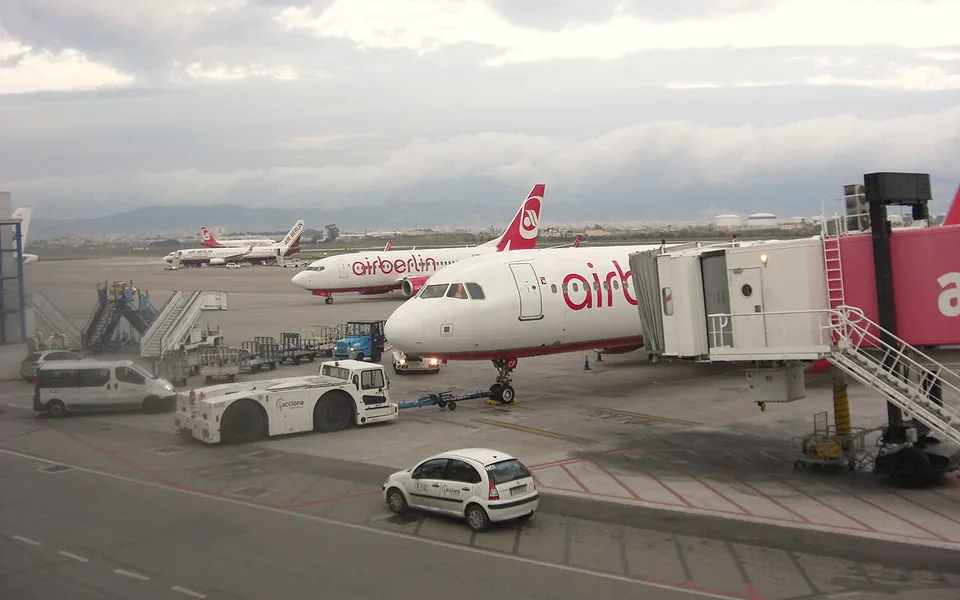
Air Berlin, Germany’s second-largest airline after Lufthansa, applied on Tuesday 15 August 2017 for insolvency proceedings at the Berlin-Charlottenburg court. It did so after its largest shareholder, Etihad Airways, with around 29% of the capital, announced that it would not provide further funding. In April Etihad had injected another €250 million, and it now called the situation “extremely disappointing”, saying it could not justify more funds. In 2016 the airline had lost €782 million and had already cut about 1,200 jobs, one in seven, and leased 38 aircraft with crew to Lufthansa.
The bridging loan
Once it had filed for insolvency, the company would have had to stop flying immediately. To prevent that, the German federal government granted it a €150 million bridging loan through the state-owned bank KfW (Kreditanstalt für Wiederaufbau), backed by a federal guarantee, according to the ministries’ joint statement. The Economy Minister, Brigitte Zypries, said it should allow the airline to operate for three months.
The government explained that it wanted to avoid tens of thousands of travellers and holidaymakers being left abroad without a flight home at the height of the season. The European Commission said on 16 August that it was examining the loan, which Berlin had notified to it as aid to a company in difficulty, and noted that strict rules apply to that type of aid.
Lufthansa confirmed that it was negotiating to take over parts of Air Berlin’s business, and Air Berlin said that talks with Lufthansa and other partners were at an advanced stage. Ryanair criticised the public support for opening the way, in its view, to a Lufthansa monopoly and questioned whether such a deal would be legitimate under competition rules. As of 17 August no agreement had been announced.
Palma and tickets
Palma de Mallorca was Air Berlin’s main operating base in southern Europe and, for years, the leading airline at the airport; this summer Ryanair had already overtaken it in passengers. In 2016 the company had cut routes and stopped operating flights between Spanish cities.
On tickets, the German government said that flights would run as scheduled and that tickets already sold remained valid and new ones could be bought. That guarantee depends on the funding being enough, and protection is not the same for all travellers: with a package holiday, European rules require the organiser to guarantee a refund of what was paid if it becomes insolvent, but someone who bought only the flight generally has no specific guarantee against the airline’s insolvency, as the European Commission itself acknowledged in 2013.
What to review
If your company has trips booked with Air Berlin, it is worth knowing which they are, what alternatives there are and what the travel agency’s conditions say about changes and refunds. It is also worth keeping proof of bookings and payments, and checking whether the purchase was made through an agency, by card or directly with the airline, because that determines whom to claim from. And if the company sells to or provides services for a company in difficulty, it is worth reviewing what has been invoiced and not yet collected, what payment terms have been granted and what share of its sales depends on that customer.
A bridging loan buys time; the underlying solution had yet to be found.
This article is general information. It is not legal, tax or investment advice, and it does not take anyone’s particular circumstances into account.