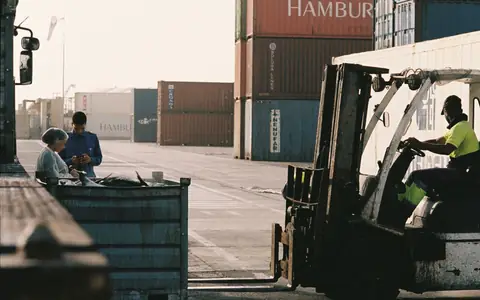
- On 24 February the government approved a royal decree-law to liberalise stevedoring in the ports.
- It did so compelled by a ruling of the EU Court of Justice that had fined Spain; dockworkers announced strikes.
- Anyone relying on sea transport should have alternative routes, realistic deadlines and insurance checked against possible delays.
On 24 February 2017 the government approved a royal decree-law to liberalise stevedoring in the ports, compelled by a ruling of the EU Court of Justice that had fined Spain. The dockworkers announced strikes. The dispute concerned an activity little seen by the general public but of strategic importance for the country’s foreign trade. Its outcome was followed closely in the business world because of possible disruptions to the movement of goods.
Stevedoring is a discreet piece of the logistics chain: almost everything imported or exported by sea passes through the hands of those who load and unload at the port. A change in its legal regime, and the threat of stoppages that accompanied it, therefore worried not only shipping and port companies but also importers, exporters and manufacturers who depend on goods arriving on time.
What stevedoring is
Stevedoring is the work of loading and unloading cargo in ports. Until then, access to the activity was heavily regulated, and that regulation was challenged by the EU Court of Justice, which penalised Spain. The court considered that the existing system restricted freedom of establishment, a basic principle of the European single market.
When a European ruling condemns a state, it must adapt its rules to comply, and if it does not it may face further penalties. That is the context of the decree: a legal obligation with a deadline, to which the government responded with an emergency rule. The debate on how to reform the sector, and with what guarantees for the workers, remained open. What matters for companies is that, until a stable solution is found, the risk of incidents persists.
Why it matters to the economy
Ports are a key piece of foreign trade. Any dispute or stoppage there can delay deliveries, raise logistics costs and affect companies that import components or export products, even if they have no direct connection to the sector. A port strike is felt in factories, in warehouses and, finally, among customers waiting for their orders.
Moreover, logistics has become very tight: many companies work with reduced inventories and delivery times promised in advance. A delay of a few days can bring contractual penalties, lost orders or production stoppages. That is why incidents at a port, however distant they may seem, deserve attention in any company that depends on sea transport. Prudence means having planned what would be done if the usual port did not function for a few days.
How to protect yourself
Anyone relying on sea transport should identify alternative routes, review delivery times promised to customers and check what their transport and cargo insurance covers in the event of delays. Not every policy covers delays caused by strikes, and it is best to know that before they happen. Logistics planning is cheaper before a dispute than during one.
It is also useful to talk to freight forwarders and logistics providers about their contingency plans, and to consider whether it is worth holding slightly more inventory of critical products during periods of higher risk. In customer contracts, it is worth reviewing the force majeure and delay clauses, to know what responsibilities are taken on if an outside incident prevents a deadline from being met. The sooner these points are clarified with customers and suppliers, the less tension there will be if a problem arises.
Logistics is a risk that is only properly valued when it fails; better to value it beforehand.
This article is general information. It is not legal, tax or investment advice, and it does not take anyone’s particular circumstances into account.