On 9 October 2025 Israel and Hamas accepted the first phase of Trump’s peace plan. On the 13th the 20 living hostages returned home and Israel released almost 2,000 Palestinian prisoners.
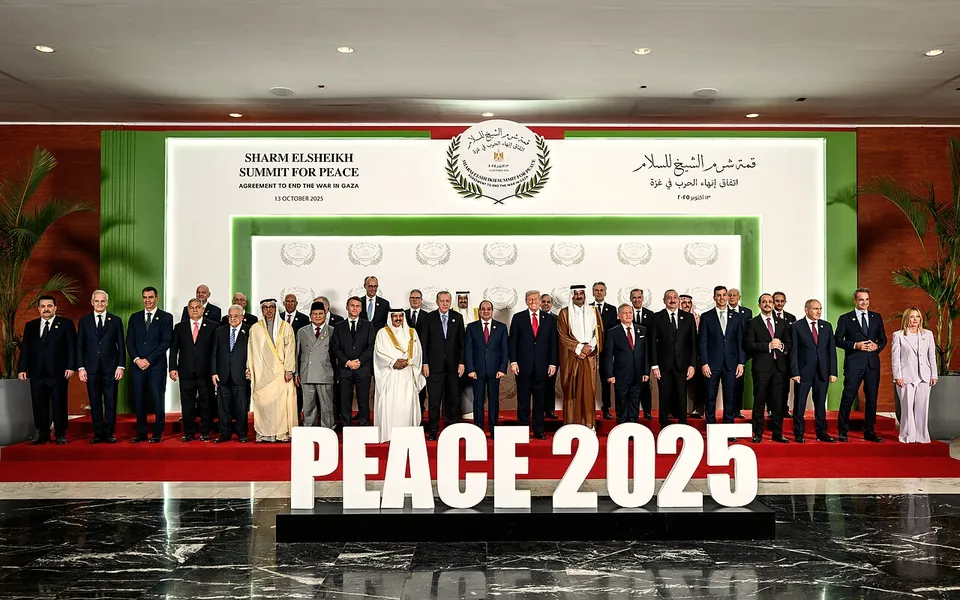
On 9 October 2025, after indirect talks in Sharm el-Sheikh (Egypt) mediated by the United States, Egypt, Qatar and Turkey, Israel and Hamas accepted the first phase of the twenty-point peace plan presented by President Donald Trump at the end of September. The Israeli government approved the deal and the ceasefire took effect on 10 October, with Israeli troops pulling back to an agreed line inside the Strip.
What we know
On 13 October Hamas handed over the 20 Israeli hostages still alive and began returning the bodies of those who had died. In exchange, Israel released close to 2,000 Palestinian prisoners and detainees. The same day Trump addressed the Israeli parliament and chaired a summit in Sharm el-Sheikh with more than twenty leaders, at which the United States, Egypt, Qatar and Turkey signed a declaration backing the deal.
The war began with the Hamas attack of 7 October 2023, in which some 1,200 people were killed in Israel and 251 were taken hostage. The Israeli offensive that followed left more than 67,000 dead, according to the Hamas-run Gaza Health Ministry, and a humanitarian crisis that the UN described as famine in part of the Strip.
What remains
The plan foresees far more complex later phases: disarming Hamas, a transitional authority under international oversight, a stabilisation force, a gradual Israeli withdrawal and the reconstruction of a largely destroyed territory. None of them had a firm timetable when the ceasefire was agreed, and incidents between the two sides continued in the following weeks.
Why it matters here
The conflict has affected energy prices and the Red Sea shipping routes, attacked by Yemen’s Houthis, which forced much of the trade between Asia and Europe to divert round the Cape of Good Hope. A lasting ceasefire lowers the geopolitical risk premium in oil and in freight.
In Spain the war has had a strong political and social echo, with the recognition of the State of Palestine in May 2024 and, in September 2025, a decree-law restricting the arms trade with Israel.
A ceasefire is not yet peace, but it is the condition for starting to build it.
This article is general information. It is not legal, tax or investment advice, and it does not take anyone’s particular circumstances into account.