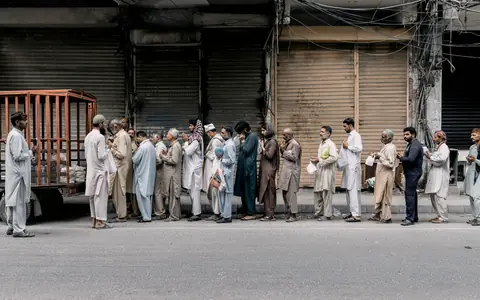
- On 15 August Trump and Putin met in Alaska to discuss the war in Ukraine.
- The summit ended without a ceasefire agreement: the underlying situation did not change.
- With an uncertain outcome, flexibility is worth more than betting on a single hypothesis.
On 15 August 2025, the presidents of the United States and Russia, Trump and Putin, met in Alaska to discuss the war in Ukraine. The summit ended without a ceasefire agreement. Meanwhile, the war continued to cost lives and suffering, and any meeting between the two leaders was followed in the hope of seeing a step towards peace. A lasting peace is, above all, a human matter, and any economic analysis must keep to its place.
For markets, a summit of this kind is a source of signals. Every gesture, every statement and every absence of agreement is read as a clue about the conflict’s future, and that reading is transmitted, almost instantly, to the prices of energy, defence shares and other assets sensitive to geopolitics. It is worth remembering that these reactions are short-term and that the value of a company or a contract depends on more stable factors.
A meeting without agreement
By ending without a ceasefire agreement, the summit left the underlying situation as it was, so uncertainty about when and how the conflict could end persisted. With no visible result, markets and companies went on weighing at once the possibility of peace and that of a long war, unable to rule out either.
A meeting without agreement is not necessarily a failure: sometimes it is part of a longer process. But in practical terms, those who take economic decisions still do not know which scenario to rely on, and that is what matters. Planning on a single hypothesis about the outcome means taking a risk that can be avoided with some foresight. It is enough to think in advance what would be done if the meeting had gone well and what if it had gone badly.
Energy and defence in the markets
Energy and defence markets reacted to every signal of peace or of the conflict dragging on. A prospect of agreement tends to make energy cheaper and defence industry less attractive; a prolongation usually has the opposite effect. These swings show up in prices almost at once.
For companies with high energy costs, those swings can become a source of budget uncertainty. For those that operate in the defence sector, they affect the visibility of their order book and growth expectations. In both cases, it is wise to distinguish between the noise of each headline and the trends that persist over time. The former change every day; the latter allow decisions to be taken on firmer ground.
A constant of the year
Geopolitical uncertainty remained a constant of the year. For companies and families with exposure to energy, European industry or supply chains in eastern Europe, it is wise to keep scenarios open and avoid decisions that depend on a single hypothesis about the outcome.
Keeping scenarios open means having prepared what would be done if the conflict drags on, if a ceasefire arrives or if there is an escalation. It is not necessary to foresee the outcome, but to know what levers exist in each case: energy contracts, alternative suppliers, price margins and liquidity reserves. That preparation is what makes it possible to act calmly. A short internal document with three scenarios and their responses is usually enough to start.
When the outcome is uncertain, flexibility is worth more than a bet.
This article is general information. It is not legal, tax or investment advice, and it does not take anyone’s particular circumstances into account.