On 1 August 2024 the Bank of England cut Bank Rate from 5.25% to 5% by five votes to four, its first cut since March 2020. What it says and what to look at.
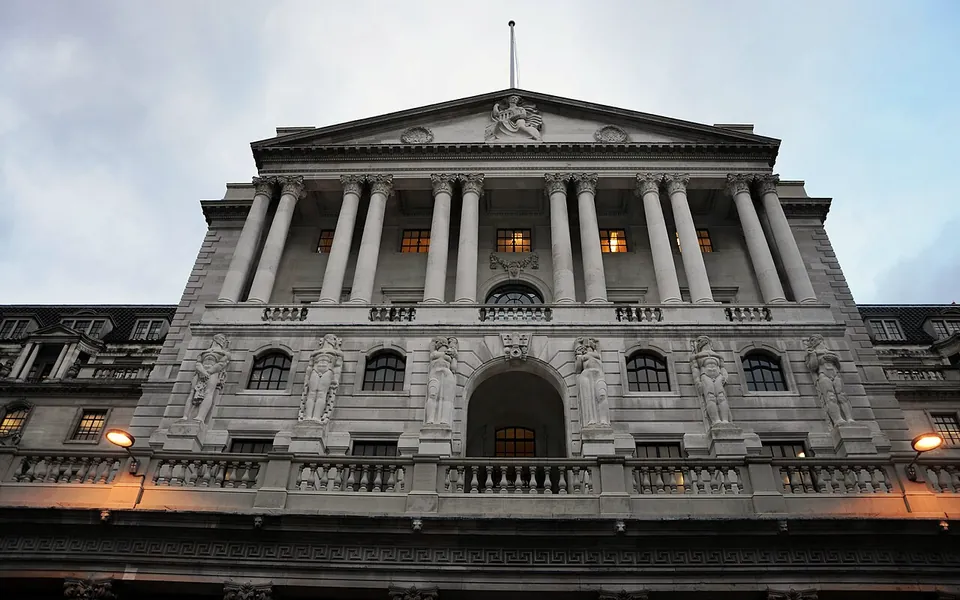
The Bank of England’s Monetary Policy Committee (MPC) decided on 1 August 2024 to cut the official rate, Bank Rate, by 0.25 percentage points, from 5.25% to 5%. It is the first cut since March 2020, and it comes after the rate was held at 5.25%, the highest in 16 years, at previous meetings.
The vote was close: five members voted in favour (Governor Andrew Bailey, Sarah Breeden, Swati Dhingra, Clare Lombardelli and Dave Ramsden) and four against (Megan Greene, Jonathan Haskel, Catherine Mann and Huw Pill), who preferred to hold at 5.25%.
Why it is cutting now
UK annual inflation was 2% in both May and June 2024, the Bank’s target. But services inflation, which the committee watches most closely, was 5.7% in June, the same as in May. The Bank said it was slightly reducing the degree of policy restrictiveness and that policy must stay restrictive for long enough.
The Bank itself expects inflation to rise to around 2.75% in the second half of 2024, when last year’s fall in energy prices drops out of the annual comparison. It did not promise a path of cuts: it will decide at each meeting, and the next one ends on 18 September. It is also continuing to shrink its balance sheet: the stock of UK government bonds it holds for monetary policy purposes was £690 billion on 31 July, and in September the committee will vote on the target for October 2024 to September 2025.
Market reaction and other central banks
Sterling fell 0.74% against the dollar, to 1.2760, its biggest one-day drop since April, and by more than 0.6% against the yen, according to Euronews.
Among other major central banks, the ECB cut its deposit rate to 3.75% in June and held it on 18 July. The US Federal Reserve kept its target range at 5.25%–5.5% on 31 July and said it does not expect to cut rates until it has greater confidence that inflation is moving sustainably towards 2%.
What to look at
This note is informative and is not a recommendation. Anyone with property, debt or a business in the United Kingdom can see how, over time, the cut lowers the cost of mortgages and variable-rate loans linked to Bank Rate; it does not affect fixed-rate loans already taken out, which depend on longer-term rates and on their reset dates.
For someone resident in Spain with income, assets or debts in sterling, the pound’s movement against the euro changes their value in euros. It is worth knowing how many assets and debts are in sterling, at what rate and with what maturities, and not deciding on the strength of a single meeting. For your own situation, ask your adviser.
A rate cut marks a change of direction, not a guaranteed path.
This article is general information. It is not legal, tax or investment advice, and it does not take anyone’s particular circumstances into account.