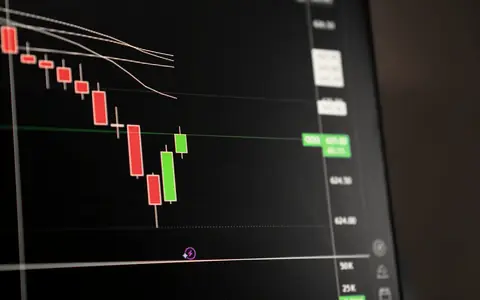
- On 8 February, Tesla said it had invested 1.5 billion dollars in bitcoin.
- The price hit new highs in the following days: a specific corporate decision became a symbol for the whole market.
- Gaining visibility does not reduce volatility; before any decision you need to know what you are buying and how much it may swing.
On 8 February 2021, Tesla announced that it had put 1.5 billion dollars into buying bitcoin. That a large listed company added crypto-assets to its balance sheet was a novelty that grabbed headlines. The price of bitcoin reacted with new highs in the following days, and what was a treasury decision by one company came to be read as a signal for the whole market. Such readings spread quickly, and they often weigh more on the price than the actual size of the transaction.
The news had an effect that went beyond the numbers. For many investors and business owners, the fact that a well-known, large company made that decision gave crypto-assets a legitimacy they had not had until then. But legitimacy and stability are different things, and it pays not to confuse them when deciding what to do with one’s own money. An asset can make the news for reasons very different from those that matter to the buyer: their time horizon, their need for liquidity and their tolerance for seeing the value fall.
What a crypto-asset is
A crypto-asset is a digital asset recorded and transferred using cryptography, not issued by a central bank or backed by a State. Its price forms in markets that operate continuously, and depends mainly on supply, demand and the expectations of those taking part, not on a business’s cash flows or an accounting value. That is why it is hard to set a reference value, and why opinions on its fair price diverge so widely.
That lack of a clear anchor partly explains why its prices swing so much. They can rise quickly when attention and optimism grow, and fall just as quickly when mood or news changes. It is a feature of this kind of asset that is worth understanding before adding an amount that matters to one’s wealth.
Visibility is not stability
Listed companies entering the market gave crypto-assets visibility, but did not reduce their volatility. An asset can gain legitimacy and still swing widely. That difference matters especially when the money invested has an intended purpose, such as a purchase, a business or retirement, and cannot wait for the price to recover.
For a company, moreover, adding such an asset to the balance sheet raises its own questions: who decides, within what limits, how it is accounted for and how it is explained to partners, banks and auditors. For a family, the news widens attention but not safety: a spectacular headline does not change the risk of what is bought. Nor does it change if the buyer is a well-known company: its circumstances, time frames and capacity to absorb losses are not those of every family or every business.
The first question
Understanding what is being bought, and how much one can afford to see it fluctuate, remains the first question. Before any decision, it is worth knowing how the asset is held in custody, what regulatory and tax framework applies to it and what share of total wealth it would represent. These are matters with nuances that are best understood with an adviser and without haste.
It also helps to set in advance the maximum amount one is willing to see swing and the time frame needed, and not to change them because of what headlines say. First the acceptable risk is defined; then, if appropriate, the instrument. If the conclusion is that the risk does not fit one’s goals, there is nothing wrong with staying out: doing nothing is also a legitimate decision.
A piece of news can change the price for a day, but it does not change the plan of someone who is clear about it.
This article is general information. It is not legal, tax or investment advice, and it does not take anyone’s particular circumstances into account.