On 24 March 2020 the IOC and Japan agreed to postpone the Tokyo Games to 2021 because of the pandemic. What is known about the postponement, its cost and what remains to be decided.
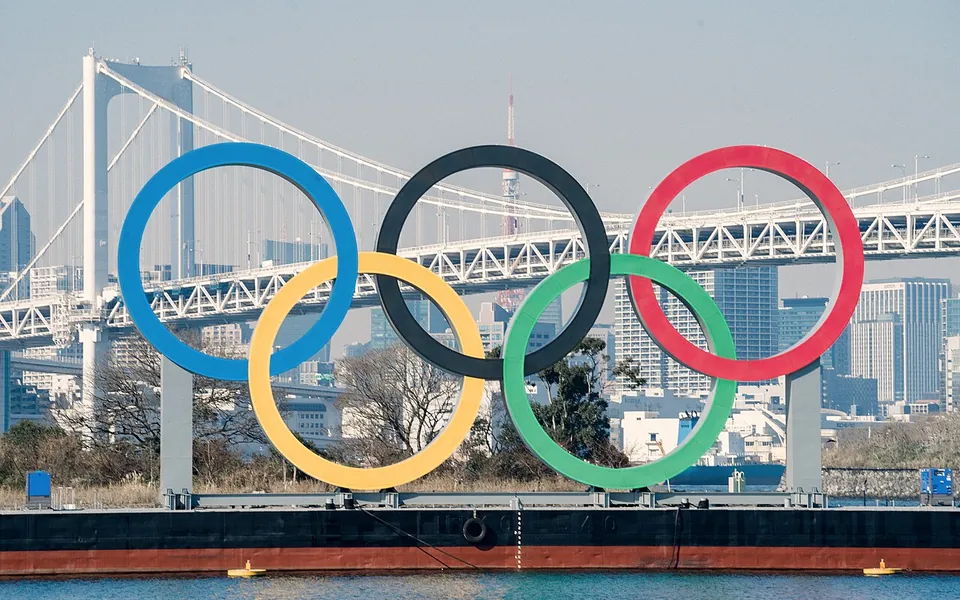
On 24 March 2020, after a telephone conversation between the president of the International Olympic Committee (IOC), Thomas Bach, and Japan’s prime minister, Shinzo Abe, it was jointly agreed to postpone the Tokyo Games. The IOC said they must be rescheduled to a date after 2020 but no later than summer 2021, because of the COVID-19 pandemic.
Abe said he had proposed a postponement of about a year, citing current circumstances, the athletes’ performance and spectators’ safety, and that Bach agreed “100%”. The Games keep the name Olympic and Paralympic Games Tokyo 2020, the postponement also covers the Paralympics, and the new dates have not yet been set. Abe said that holding them in 2021 would be proof of a victory by human beings over the coronavirus. The decision comes thirteen days after the WHO declared the pandemic.
A first in peacetime
The modern Games had been cancelled three times, in 1916, 1940 and 1944, always because of the world wars; they had never been postponed. Tokyo, which also hosted the 1964 Games and was chosen as host in 2013, had planned to open them on 24 July 2020, with a Paralympics due to start on 25 August; the Games would have brought together athletes from all over the world for two and a half weeks of competition. Pressure to postpone had been growing for weeks: athletes, sponsors, television networks, more than two hundred national Olympic committees and international federations were calling for it.
The torch relay, due to start on Thursday 26 March in Fukushima, will not go ahead in the planned format. The organising committee said the flame would be stored and displayed in Fukushima for now, and the IOC said it would remain in Japan.
The cost
There is not yet an official figure for the cost of the postponement. According to Reuters, Japan had spent about $12,000 million preparing the Games, and Japanese sponsors had contributed a record of about $3,000 million, with most contracts signed for a single year.
Before the decision, a Japanese economist, Katsuhiro Miyamoto, professor emeritus at Kansai University, calculated that a one-year delay would cost about 640,000 million yen, or about $6,000 million, of which some 423,000 million yen would be direct costs such as upkeep of the venues, reprinting of materials and recruiting new volunteers. It is an estimate, not an official figure, and it remains to be seen how those costs will be shared between the IOC, the organising committee and the Japanese authorities.
What it means for business
For sponsors, broadcasters, hotels and event organisers, the postponement means reviewing contracts with a fixed calendar. A sponsorship or broadcasting-rights contract usually ties payments, counter-performance and exclusivity to a date of delivery; if that changes, deadlines and amounts have to be renegotiated. It is worth checking force majeure clauses, refunds of tickets and travel packages, and cancellation insurance, which often excludes pandemics. For federations and athletes, it means reorganising the qualifying events still to be held. The exact dates in 2021, that calendar and the sharing of costs remain to be settled.
The Games keep the name Tokyo 2020 even though they will be held a year later: the pandemic has changed the Olympic calendar, not its destination.
This article is general information. It is not legal, tax or investment advice, and it does not take anyone’s particular circumstances into account.