- The court held that the ban did not pass the proportionality test and infringed the Basic Law.
- It also limited the colonial-era emergency law that the government used to enact it.
- For companies and families with interests in Hong Kong, judicial independence is a foundation of its appeal.
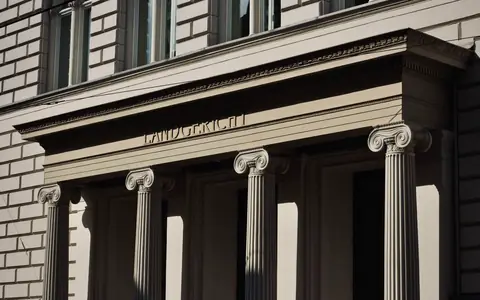
On 18 November 2019, Hong Kong’s High Court, with two judges, Godfrey Lam and Anderson Chow, delivered a 106-page judgment declaring that the ban on covering the face at public gatherings did not pass the proportionality test. It also held that the provisions of the emergency powers ordinance allowing the chief executive to make rules “on any occasion of public danger” are contrary to the Basic Law, the territory’s mini-constitution.
Chief Executive Carrie Lam had used that colonial ordinance on 4 October, for the first time since the 1967 riots, to introduce the ban amid the protests that have shaken the city since June. The challenge was brought by opposition legislators. The court clarified that it is not opposed to every form of mask ban, but it is to the one that was enacted, for going beyond what is reasonably necessary. As a result of the protests, the local government had hardened its response, and the court decision came amid an escalation of tension.
Why the judgment matters
Hong Kong is governed by the principle of “one country, two systems”, agreed when the United Kingdom returned the territory to China in 1997, which guarantees it for fifty years a high degree of autonomy, its own legal system of British tradition and the independence of its judges. The decision shows that the courts can examine and limit the acts of the local government, something that does not happen in every system.
That independence is one of the reasons the city is a global financial centre: investors and companies trust that contracts will be enforced and disputes resolved impartially. Any signal about the strength of the judicial system, one way or the other, is followed closely. Hong Kong is also a usual entry point for foreign investment into mainland China, which explains investors’ interest in following its evolution.
What uncertainty remains
The judgment is not necessarily final: the government may appeal, and the actual validity of the ban will depend on what higher courts decide. Moreover, the underlying issue, the political tension between the city and Beijing, remained unresolved, and the protests continued with episodes of violence that affected economic activity.
For business, the environment is one of high uncertainty: transport disruptions, shop closures, falling tourism and retail sales, and investor caution. The city entered a technical recession in the third quarter, according to official figures. In parallel, analysts kept watch on the local currency, pegged to the dollar, and on capital flows, sensitive indicators of confidence.
What to review
Companies with subsidiaries, regional offices or customers in Hong Kong should review their continuity plans, their insurance cover for interruption and unrest, and the situation of seconded staff. It is also useful to know which contracts are subject to the jurisdiction of Hong Kong courts and what alternatives exist, such as international arbitration.
Families with asset structures, accounts or property in the territory should review with their adviser how they are organised, who manages them and which rules apply to them. The point is not to take decisions out of alarm, but to have the information in order if the environment becomes more complicated. There is no need to take decisions out of alarm, but it is worth knowing which clauses protect the company and its people if the environment deteriorates.
The value of a financial centre depends in large part on confidence in its courts.
This article is general information. It is not legal, tax or investment advice, and it does not take anyone’s particular circumstances into account.